Rome Public Transport: Everything You Need to Know for Getting Around the City
Why Rome’s Public Transport is a Traveller’s Best Friend
Tom Miller
At a glance: Rome public transport is reliable, affordable, and well suited to tourists. Compared to other cities in Europe, Rome’s public transportation system stands out for its unique blend of history and efficiency; although the metro is the smallest in Europe, it still serves almost a million people daily.
Buses, trams, and the Rome metro cover most of the city, and a single ticket is valid for 100 minutes across multiple services, while travel passes offer unlimited use for longer stays. Rome’s public transport system is operated by ATAC, which manages most of the public transport lines in the city.
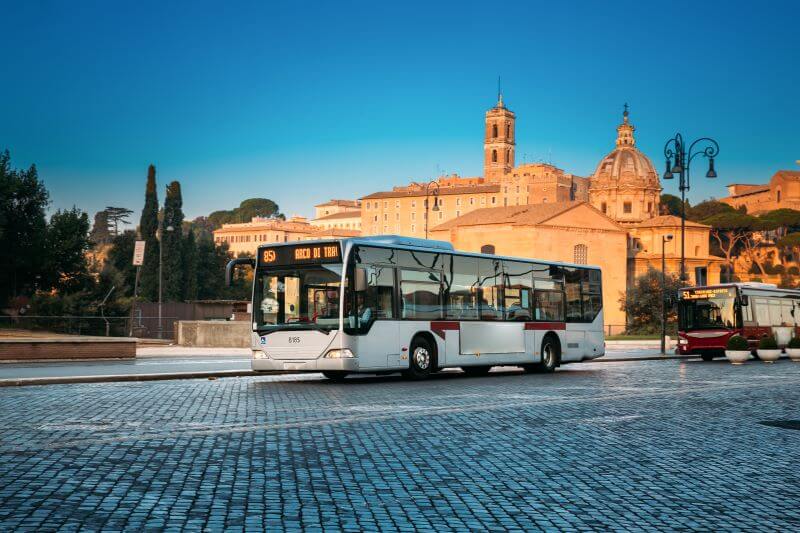
Public buses offer scenic routes past Rome's iconic architecture
An Integrated Network Across the City
Rome’s public transportation system brings together buses, trams, and metro lines into a single, integrated network that makes transport in Rome straightforward even for first-time visitors. With dense coverage across the city, Rome public transport allows travellers to get around Rome efficiently, whether moving between main attractions or heading into quieter neighbourhoods.
Affordable and Flexible Ticketing
One of the biggest advantages of Rome public transport is how cost effective it is. A single ticket is valid for 100 minutes and can be used on buses and trams as well as the metro, making public transport a smart choice for short journeys and spontaneous sightseeing. This same ticket concept simplifies public transportation and helps visitors focus on enjoying the city rather than worrying about fares.
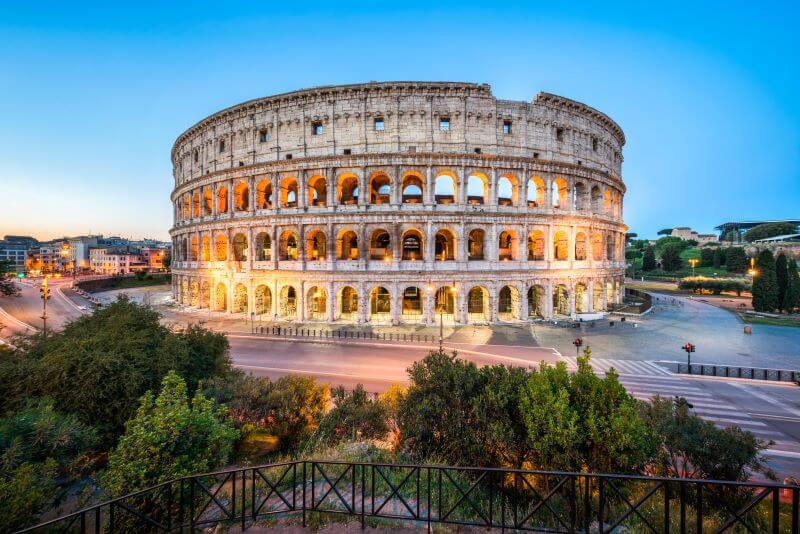
The Colosseum illuminated at dusk, easily reached by Metro Line B
Easy Access to Rome’s Main Attractions
Using public transport in Rome makes it easy to explore the historic center and reach iconic sights such as the Roman Forum and the Vatican Museums. Instead of navigating traffic or long walks, tourists can rely on buses, trams, and the Rome metro to move smoothly between landmarks spread across the ancient city.
Well-Connected Stations and Routes
Rome’s public transportation system is well connected, with metro stations and bus stops located throughout the city centre and beyond. Each bus stop is clearly marked with route information, making it easier for travelers to navigate and access buses that cover nearly every part of the city. Major routes converge at key stations, giving passengers convenient access to popular areas, cultural sites, and transport hubs around Rome.
For easier route planning and real-time updates on public transport delays, consider using an app like Moovit.
Where to Buy Tickets on Arrival
To use public transport in Rome, visitors can buy public transport tickets at ticket machines, bus stations, and major hubs such as Termini Station. These options make access easy on arrival and ensure that tourists can start using public transport immediately without complicated procedures.
Public Transport Options
Rome’s Metro System: The Fast Track to Major Attractions
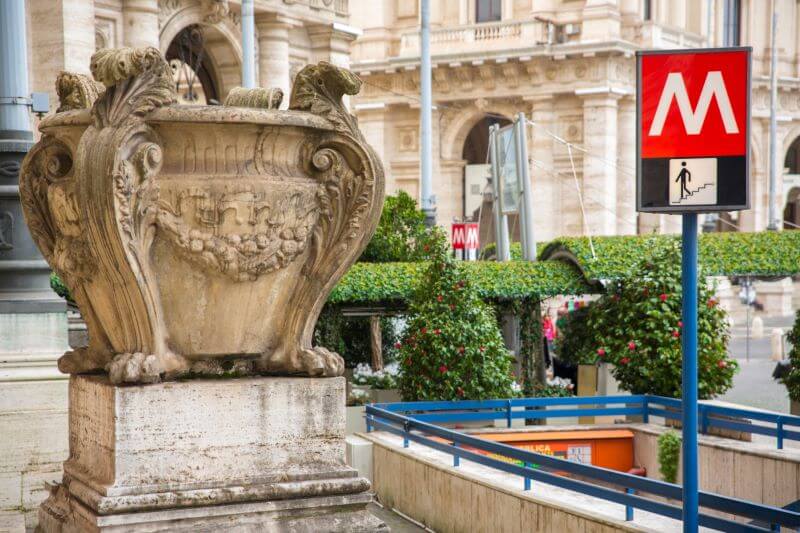
A Rome Metro station entrance in the heart of the city
Is the metro the fastest way to get around Rome?
Quick answer: The Rome metro is the fastest way to cross longer distances in the city, especially during rush hour, but buses are often better for short trips and sightseeing in the historic centre.
Metro lines and coverage
The Rome metro consists of three lines – Line A, Line B, and Line C – which together form the backbone of Rome’s public transportation system. These metro lines connect important districts and offer a fast way to travel across the city, especially when traffic slows down buses during busy periods.
Key metro stations for sightseeing
Several metro stops are particularly useful for tourists visiting Rome’s main attractions. Spagna metro station provides access to the Spanish Steps, Colosseo station sits next to the Colosseum and Roman Forum, and Ottaviano station is ideal for reaching the Vatican, the Vatican Museums, and the Sistine Chapel. San Giovanni is a key interchange station on Line A, connecting to historic and central areas of Rome. The Monti neighborhood, located near the Colosseum and Roman Forum, is easily accessible via public transport and is popular with tourists.
Frequency, operating hours, and rush hour
The Rome metro runs frequently throughout the day, with shorter intervals during peak times. Buses, trams, and the metro typically start service around 5:30 am and run until midnight every day, with limited night bus service available after these hours. To avoid crowds, it is best to travel outside rush hour, usually between 7–9 am and 5–7 pm, when passengers are heading to and from work across the city.
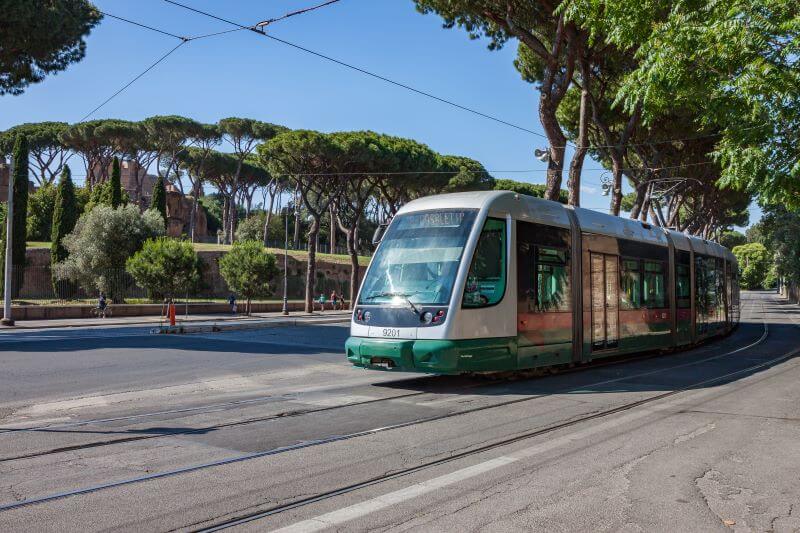
Rome's tram network gliding through tree-lined historic districts
Buses and Trams: Your Gateway to Rome’s Hidden Gems
Are buses easy to use for tourists in Rome?
Quick answer: Yes. Buses in Rome are widely used by tourists, run across the entire city, and are easy to navigate with clear bus stops and tools like Google Maps.
Where buses and trams are most useful
Buses and trams play a crucial role in Rome public transport, especially in areas where the metro does not reach. They allow travellers to get around Rome more flexibly and access neighbourhoods, viewpoints, and streets that lie beyond metro lines.
Useful routes for neighbourhoods and viewpoints
Several bus routes and tram lines are particularly useful for tourists, connecting places such as Trastevere, Testaccio, and Piazza Venezia. These bus lines give access to lively districts, local restaurants, and historic streets while offering scenic views of the city along the way.
Planning routes and finding the right stop
When using buses and trams, it helps to check routes and schedules in advance. Using navigation apps like Google Maps allows you to efficiently plan one trip from start to finish. Clear signage at bus stops and the use of Google Maps make it easier to identify the right bus route, follow your journey in real time, and know when to get off. You can validate your public transport ticket on buses by using the validation machines located inside the bus.
Tranquil gardens await beyond Rome's bustling transport hubs
Regional Trains: Explore Beyond the City Centre
Regional trains are ideal for travellers who want to explore around Rome and discover destinations beyond the city centre. Popular day trips include Ostia Antica, Tivoli, and Castel Gandolfo, all easily reached by train using Rome’s wider public transport network.
Termini Station acts as the main transport hub for regional trains, buses, and the Rome metro. From here, passengers can switch seamlessly between different forms of public transit and plan efficient trips both within the city and beyond.
Combining regional trains with other public transport options allows travellers to maximise flexibility. Using the same ticketing system and coordinated schedules makes transport in Rome and its surroundings simple and convenient.
Rome's peaceful parks provide respite from the buzzling city
Ticketing and Passes
How long is a Rome public transport ticket valid?
Quick answer: A standard public transport ticket in Rome is valid for 100 minutes and can be used on buses, trams, and the metro within that time, as long as travel continues in one direction on the metro.
Where and How Tickets Work
Public transport tickets in Rome can be purchased at ticket machines, bus stations, and metro stations, and they are valid for 100 minutes across the public transport network. This includes buses, trams, and metro services, allowing smooth transfers using the same ticket.
Travellers navigating Rome with city passes and comfortable shoes
Travel Passes for Unlimited Use
Single Ride Tickets
For one-off journeys, single ride tickets are available across Rome’s public transport network, covering buses, trams, and the metro.
Time-Based Travel Passes
If you’re planning to use public transport frequently, time-based travel passes offer better value. These passes provide unlimited access to Rome’s buses, trams, and metro for fixed periods of 24, 48, or 72 hours, making them ideal for intensive sightseeing. For visitors planning more than two or three trips per day, these passes eliminate the hassle of buying individual tickets while reducing overall costs. The Roma Pass is a well-known option that combines unlimited public transport with free entry to selected attractions.
The Rome City Pass is another excellent option for visitors. This city pass grants access to multiple top attractions across the city, with the added flexibility of including public transport as an optional extra. By bundling sightseeing and travel together, the Rome City Pass helps you save money while making it easy and stress-free to move between sites. Purchasing your pass in advance ensures a smoother experience throughout your stay.
Vatican City's grandeur, just a short journey on public transport
Navigating the City Centre
Is public transport necessary in Rome’s historic centre?
Quick answer: In Rome’s historic centre, many attractions are walkable, but public transport is useful for saving time, reaching outer districts, or returning after a long day of sightseeing.
Public Transport in the Historic Centre
The city center and historic center are well served by Rome public transport, with numerous bus stops and metro stations providing easy access. This makes it simple to reach main attractions without relying on taxis or private transport.
Google Maps is a reliable tool for planning routes across Rome. It helps users identify the best bus routes, metro lines, and transfer points, making it easier to get around Rome efficiently.
Rome’s public transport system is clearly signposted, with maps and information boards at metro stations and bus stops. Even travellers visiting for the first time can navigate the system with confidence.
Many parts of the historic center are also walkable, allowing visitors to combine public transport with short walks. Attractions such as the Trevi Fountain and Piazza Navona are close enough to explore on foot once you arrive in the area.
To avoid crowds, it is advisable to limit travel during rush hour when buses and the metro are busiest. Choosing quieter times helps make public transport more comfortable and enjoyable.
Traveling to and from the Airport
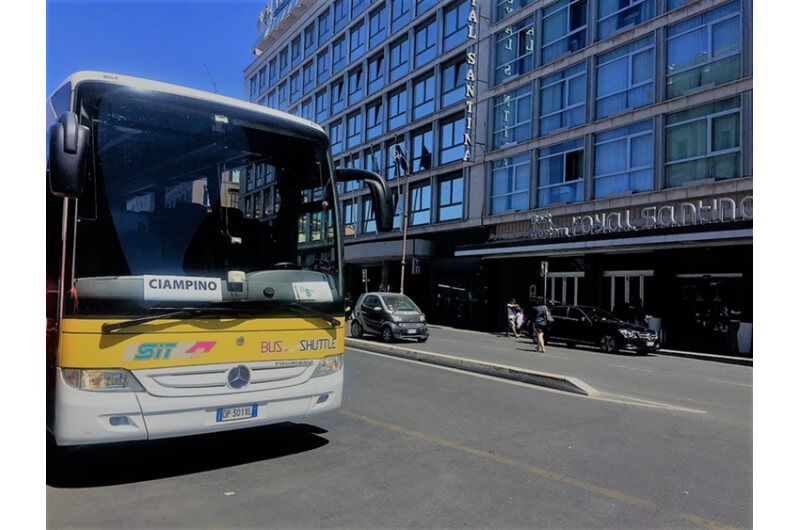
SITBUS shuttle connecting Rome's main transport hubs and attractions
What is the easiest way to get from Fiumicino Airport to Rome?
Quick answer: The easiest way to get from Fiumicino Airport to Rome is the Leonardo Express train to Termini Station, while buses offer a cheaper alternative.
What is the easiest way to get from Ciampino Airport to Rome?
Quick answer: The easiest way to get from Ciampino Airport to Rome is by bus to a central metro station, such as Termini or Anagnina, while taxis offer a faster but more expensive alternative.
Train and bus connections from the airport
Fiumicino Airport is well connected to the city by train and bus, making arrival and departure straightforward. These public transport options provide reliable access between the airport and central Rome.
The Leonardo Express train runs directly from Termini Station to Fiumicino Airport, while several bus services offer alternative airport transfer options at different price points.
In addition to public transport, private airport transfer services and shared shuttles are available for travellers seeking door-to-door convenience.
Checking public transport schedules in advance helps travellers plan their airport transfer efficiently and avoid unnecessary waiting times.
Rome’s public transport system integrates airport connections smoothly, ensuring passengers can get around the city easily from the moment they arrive.
Exploring Rome by bike offers an alternative to buses and Metro
Tips for a Stress-Free Journey Using Public Transportation
Is Rome public transport safe for tourists?
Quick answer: Rome public transport is generally safe, especially during the day, but travellers should stay alert in crowded areas and keep personal belongings secure.
Best times to travel
Travelling outside peak times helps visitors avoid crowds and enjoy a more relaxed experience on buses, trams, and the Rome metro.
Safety tips for busy routes
Keeping an eye on personal belongings is important, especially in busy stations and on crowded routes, as pickpocketing can occur.
Families with strollers and travellers with reduced mobility should plan routes carefully, as accessibility varies between metro stations and bus lines.
Making full use of the 100-minute validity of a ticket allows passengers to combine multiple journeys on the same ticket without extra cost.
Traveller FAQs: Solving Common Concerns About Rome Public Transport
Piazza Navona's baroque splendour, well-connected by bus routes
What is the cheapest way to get around Rome? For most tourists, the cheapest way to get around Rome is by using public transport travel passes. Options such as 48-hour or 72 hour passes allow unlimited use of buses, trams, and the Rome metro, making them more cost effective than buying single tickets for multiple daily journeys.
Is Rome public transport suitable for families? Yes. Rome public transport is generally family friendly, with wide bus aisles, space for strollers on many vehicles, and clear signage across the network. However, accessibility can vary between metro stations and older vehicles, so planning routes in advance is helpful.
Do you need to speak Italian to use public transport in Rome? No. Most tourists can get around Rome without speaking Italian. Ticket machines, metro maps, and information screens are often available in English, and route-planning apps make navigation straightforward.
Are travel passes better than single tickets for tourists? For most visitors, travel passes are the easiest and most practical option. They offer unlimited use of Rome public transport and remove the need to buy and validate individual tickets for each journey, which is especially convenient during busy sightseeing days.