15 Best Foods to Try in Barcelona: The Ultimate Catalan Food Guide (2026)
A Guide to Iconic Dishes to Try
Amanda Wilson
The best foods to eat in Barcelona include seafood paella, arroz negro, patatas bravas, jamón ibérico, pa amb tomàquet, pintxos, crema catalana, and other Catalan classics. Barcelona’s food scene blends fresh Mediterranean seafood, slow-roasted vegetables, and bold Catalan flavours — most of it built on extra virgin olive oil, garlic, and locally sourced produce.
Below is a quick-reference list, followed by detailed descriptions, where to eat, and practical tips.
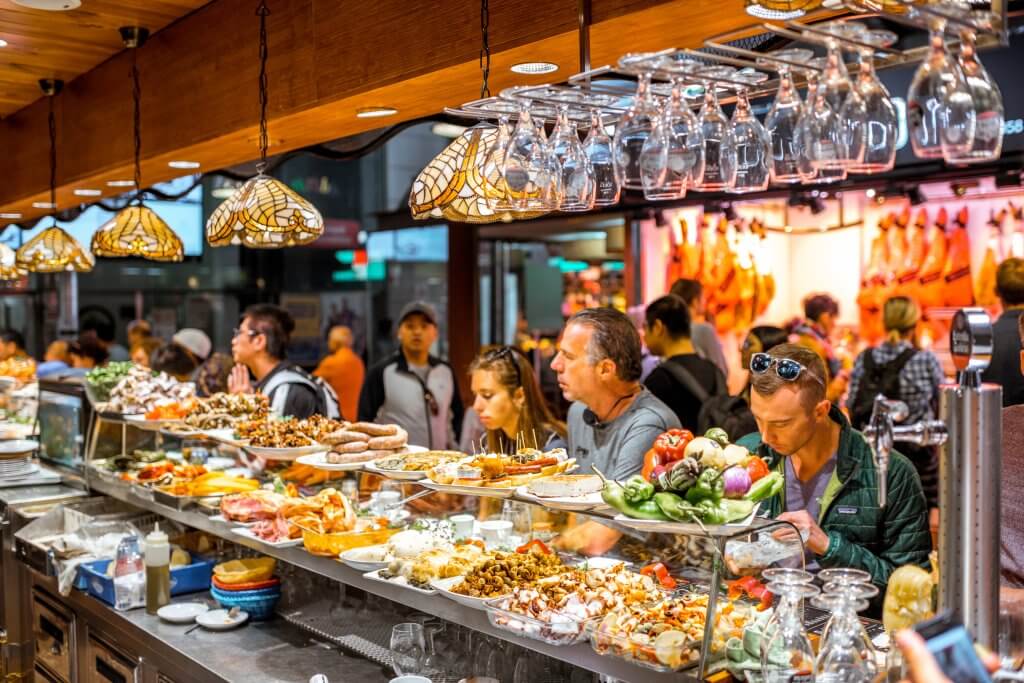
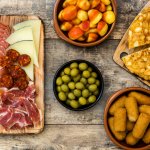
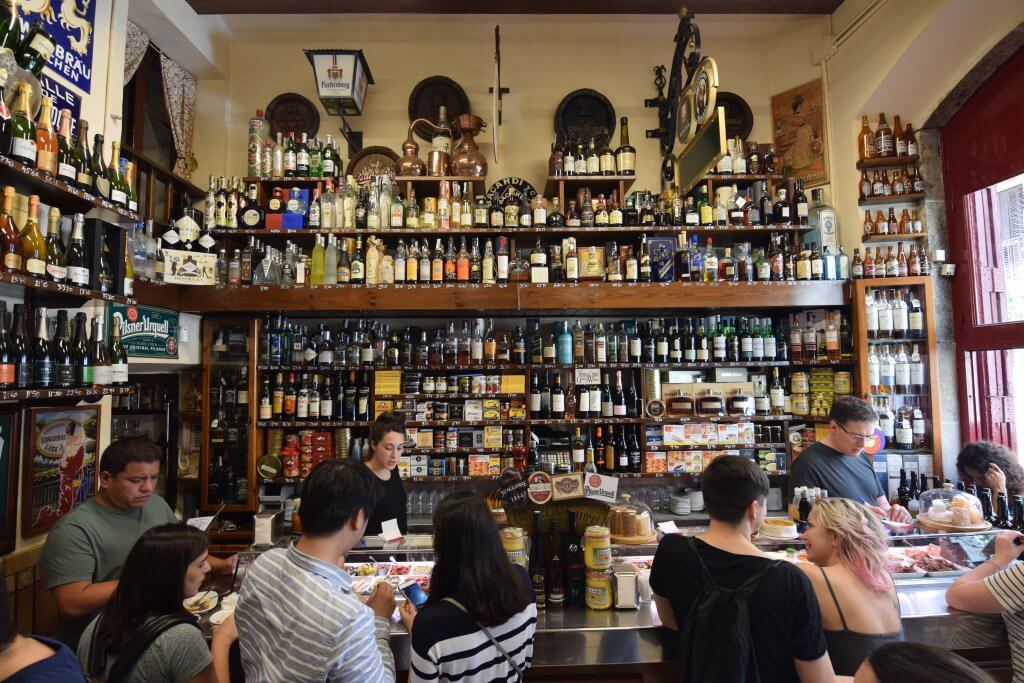
Tapas Bar in the famous La Boqueria Market
At a Glance: The 15 Best Barcelona Foods
#
Dish
Category
What It Is
1
Seafood Paella
Seafood
Saffron-infused bomba rice with prawns, mussels, and calamari
2
Arroz Negro
Seafood
Squid-ink rice with tender seafood, served with garlic aioli
3
Suquet de Peix
Seafood
Traditional Catalan fish stew in saffron-almond broth
4
Patatas Bravas
Tapas
Crispy potato cubes with spicy tomato sauce and aioli
5
Bombas
Tapas
Potato-and-meat croquettes with two sauces
6
Jamón Ibérico
Tapas
Hand-carved premium cured ham
7
Gambas al Ajillo
Tapas
Garlic-and-chili shrimp sautéed in olive oil
8
Croquetas
Tapas
Crispy béchamel bites, usually filled with jamón
9
Pintxos
Small Bites
Elaborate bites on bread, held with a cocktail stick
10
Pa amb Tomàquet
Catalan Classic
Toasted bread rubbed with garlic, tomato, olive oil, and salt
11
Botifarra amb Mongetes
Catalan Classic
Grilled sausage with white beans
12
Calçots
Catalan Classic
Grilled spring onions with romesco sauce (spring only)
13
Crema Catalana
Dessert
Citrus-and-cinnamon custard with caramelised sugar
14
Mel i Mató
Dessert
Fresh cheese drizzled with honey and walnuts
15
Xuixos
Dessert
Deep-fried pastry filled with crema catalana
The classic Valencian paella consists of chicken, rabbit and chorizo
Fresh Seafood Sensations
Barcelona’s coastal location means seafood plays a starring role in its cuisine.
Seafood Paella
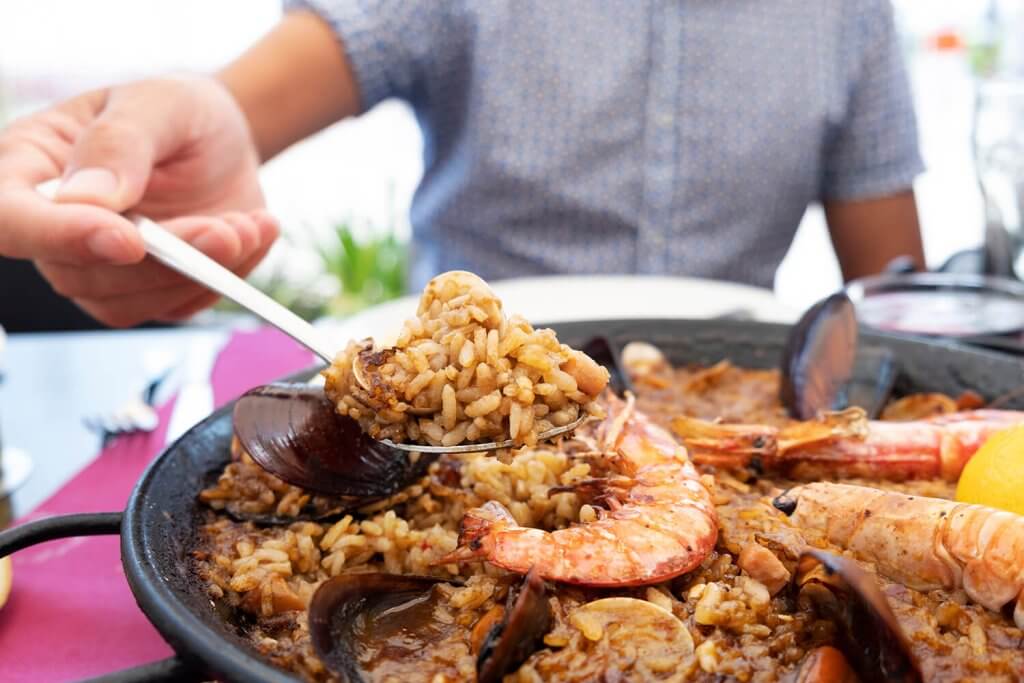
Whilst paella might have originated in Valencia, Barcelona’s seafood version is nothing short of spectacular. Picture this: perfectly cooked bomba rice tinged golden with saffron, topped with fresh prawns, mussels, and calamari caught fresh from the Mediterranean. Head to beachfront restaurants in Barceloneta for the most authentic experience—just remember that traditional paella is a lunchtime affair!
TIP: Cal Pep is a Barcelona institution, famous for its seafood and convivial atmosphere.
Arroz Negro
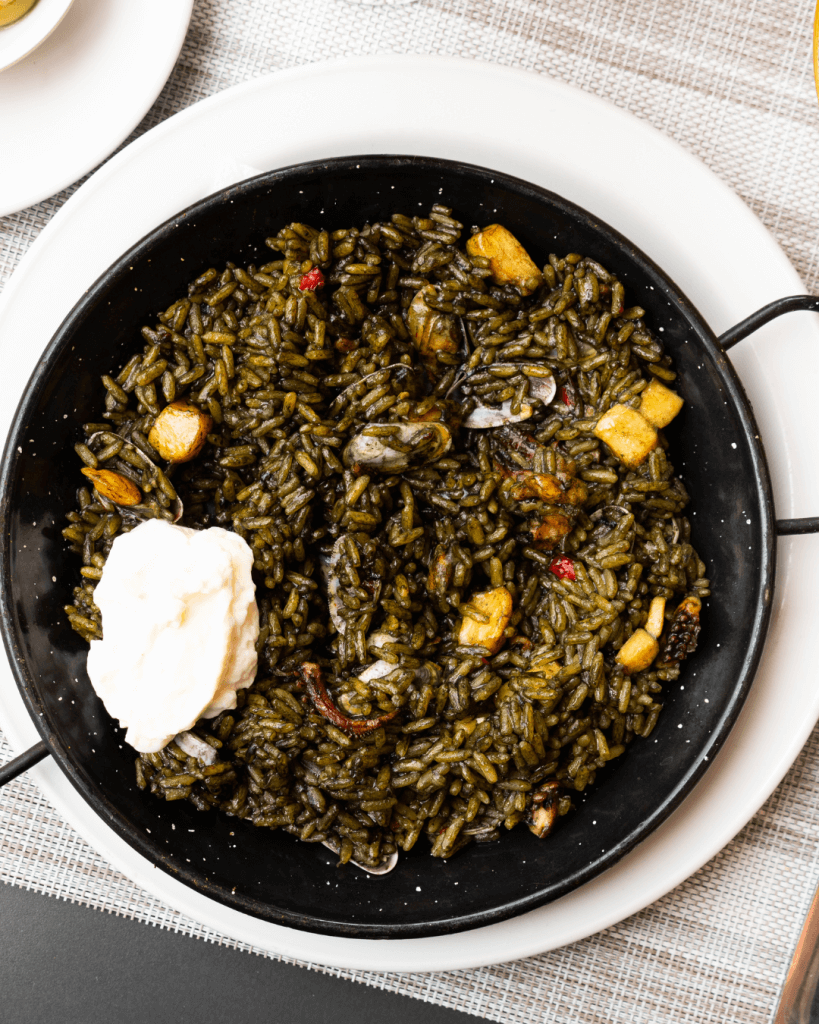
Simply delicious: Arroz negro with aioli
Attention seafood lovers! Don’t let its striking appearance fool you—this jet-black rice dish is a true delicacy. Coloured and flavoured with squid ink, arroz negro combines tender seafood, particularly squid and prawns, with perfectly cooked rice that absorbs all the rich flavours of the sea. The dish is typically served with a dollop of garlic aioli, which adds a creamy contrast to the intense maritime flavours. It’s a must-try for seafood enthusiasts and adventurous eaters alike!
Suquet de Peix
Suquet de peix is a traditional Catalan fish stew that began as a humble fisherman’s meal. Tender fish and seafood sit in a saffron-infused broth thickened with ground almonds and picada — a paste made from nuts, bread, garlic, and herbs. For the most authentic versions, visit seaside restaurants in Barceloneta or the fishing village of El Masnou just outside the city.
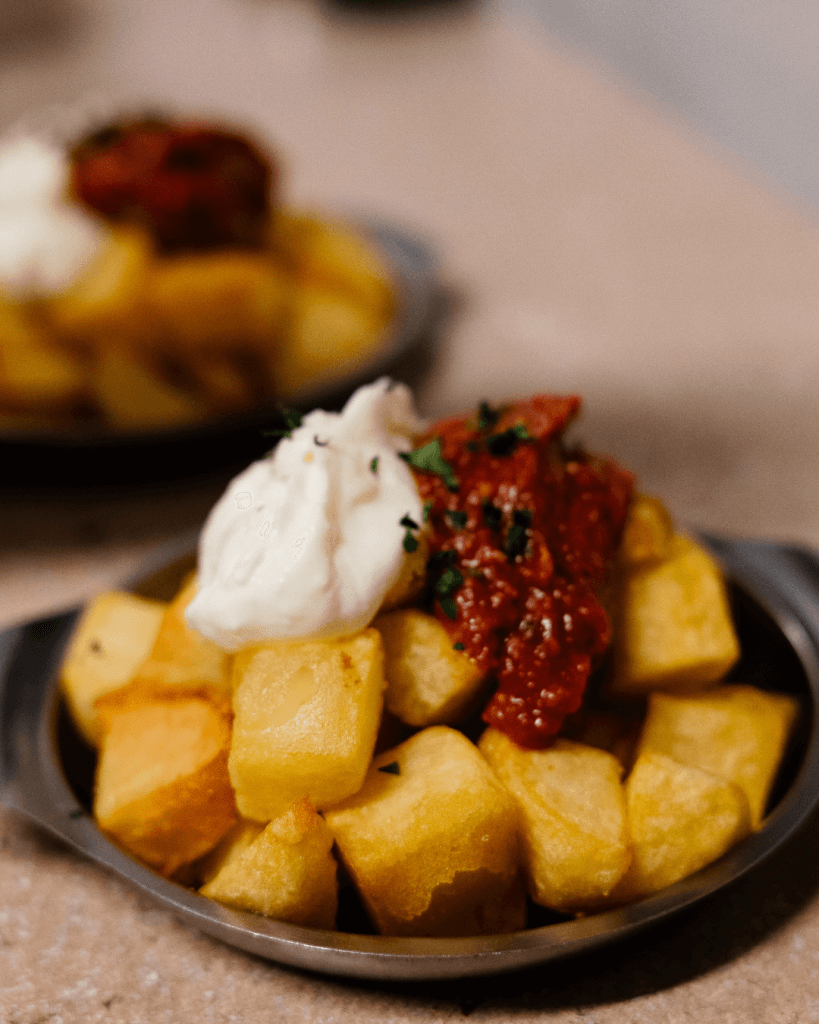
Enjoyable at any time of day: Patatas Bravas
Tapas: Small Bites, Big Flavours
No visit to Barcelona is complete without indulging in the city’s tapas culture. These small, flavourful dishes are perfect for sharing and sampling a variety of local specialities.
Must-try classics include:
Patatas Bravas: Crispy potato cubes drowned in spicy tomato sauce and garlic aioli—the ultimate comfort food. The bravas sauce, made with tomatoes, sherry vinegar, onion, garlic, chilies, paprika, and fresh herbs, adds a tangy and slightly sweet flavor to the dish. Visit a local tapas bar to try this popular Barcelona food.
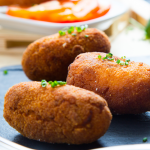
Bombas: Barcelona’s own creation of potato croquettes with minced meat, topped with two types of sauce.
Jamón Ibérico: Hand-carved slices of premium cured ham that melt in your mouth.
Pimientos de Padrón: Small green peppers blistered and seasoned with sea salt—some spicy, some mild, it’s food roulette!
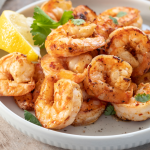
Gambas al Ajillo: Succulent shrimp sautéed in olive oil with thinly sliced garlic and chili peppers. This classic tapa is a favourite at many Barcelona eateries.
Croquetas: These crispy, creamy bites are a staple of any tapas menu. The most traditional filling is jamón (ham), but you’ll find countless varieties including wild mushrooms, spinach with pine nuts, or seafood. The secret lies in the perfectly crispy exterior giving way to an impossibly creamy béchamel filling—pure comfort food at its finest! Fried eggs are also a popular addition to dishes like pisto, enhancing the meal with their rich flavor.
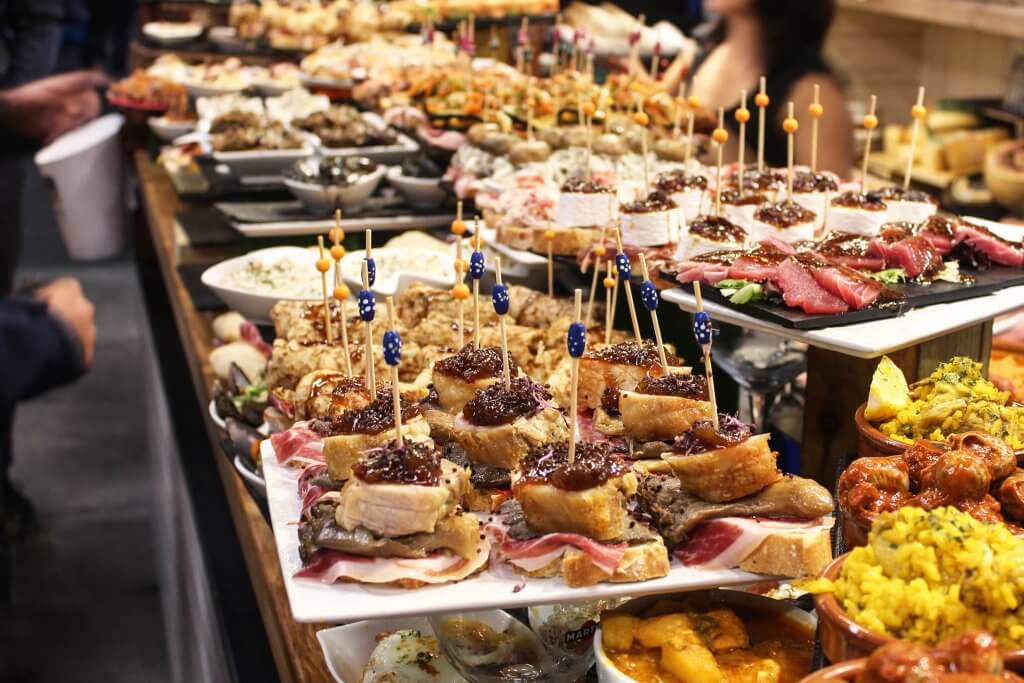
Pintxos: A thousand flavours in one night
Pintxos: Northern Delicacies in Catalunya
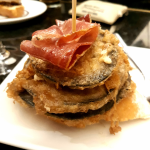
While originally from the Basque Country, Barcelona has embraced pintxos culture with open arms. These small, elaborate bites served on bread and held together with a cocktail stick (pintxo means ‘spike’) are both a visual and gastronomic delight. Manchego cheese is a popular pairing with traditional Spanish meats like Jamón Ibérico and chorizo.
Head to Carrer de Blai in the Poble Sec neighbourhood, known as “Pintxo Alley,” where you’ll find dozens of bars serving these miniature culinary masterpieces. From classic combinations like tortilla española with piquillo peppers to modern creations featuring fresh tuna tartare or grilled foie gras, pintxos offer a perfect way to sample multiple flavours in one evening.
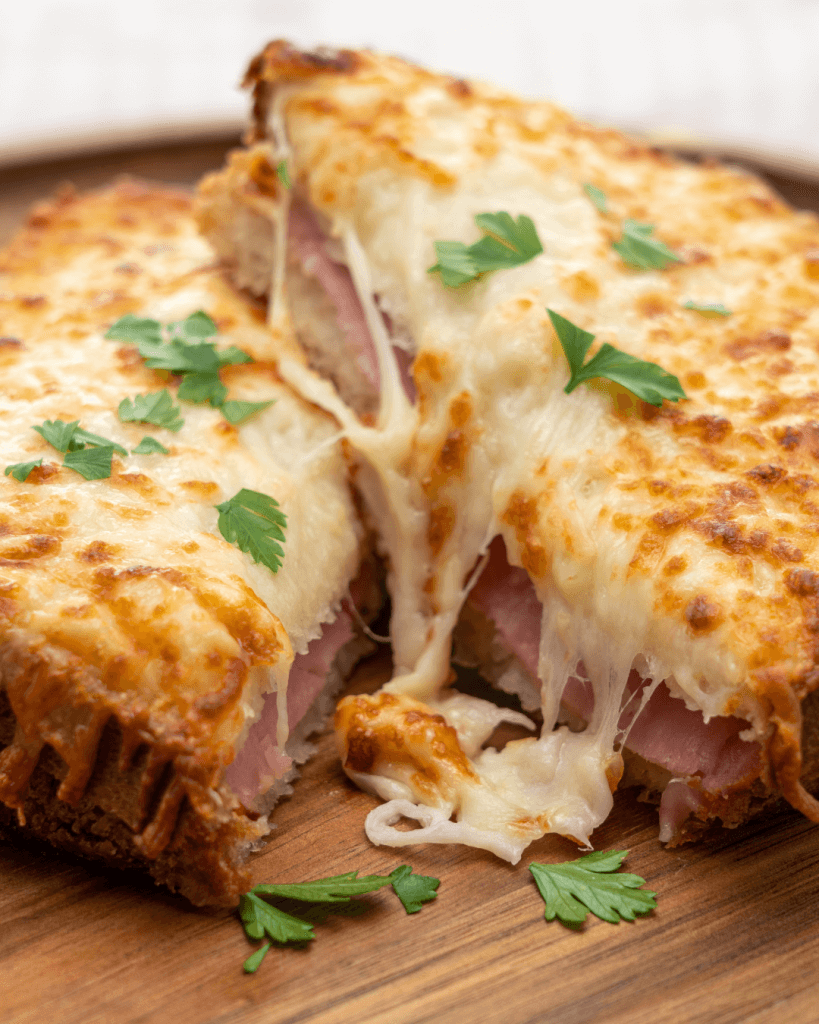
The classic Bikini Sandwich
Barcelona Street Food Worth Trying
Beyond the 15 essential dishes, Barcelona’s street food scene adds international variety to the mix. Three standouts to look for include empanadas (savoury pastries filled with meat, cheese, or vegetables), falafel (widely available thanks to the city’s strong Middle Eastern food influence, typically served in pita with hummus), and the bikini sandwich (a toasted ham-and-cheese sandwich elevated with truffle oil — a Barcelona café staple).
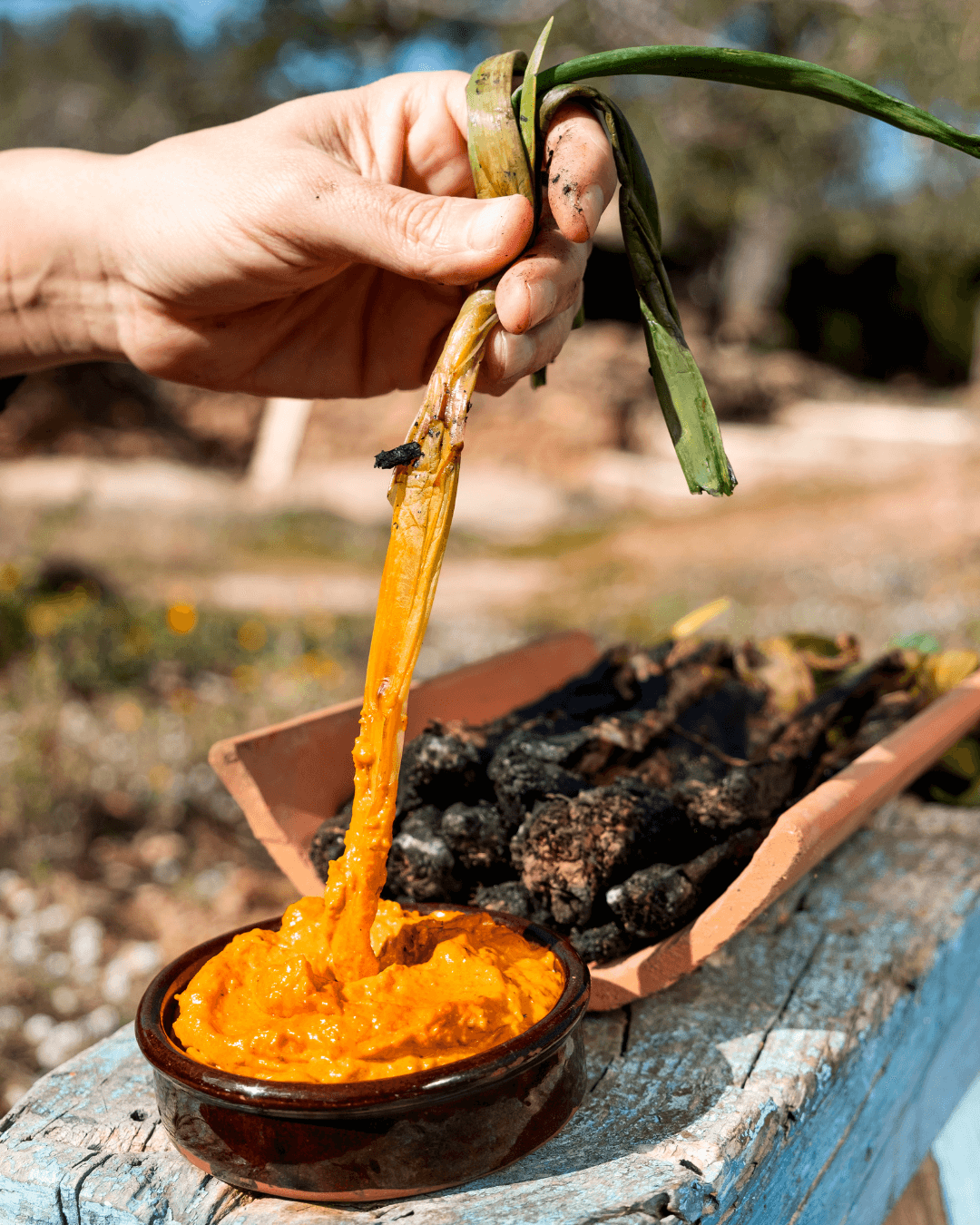
Calçots: grilled spring onions
Catalan Culinary Treasures with Extra Virgin Olive Oil
Discover the unique flavours of Catalan cuisine with these local specialities:
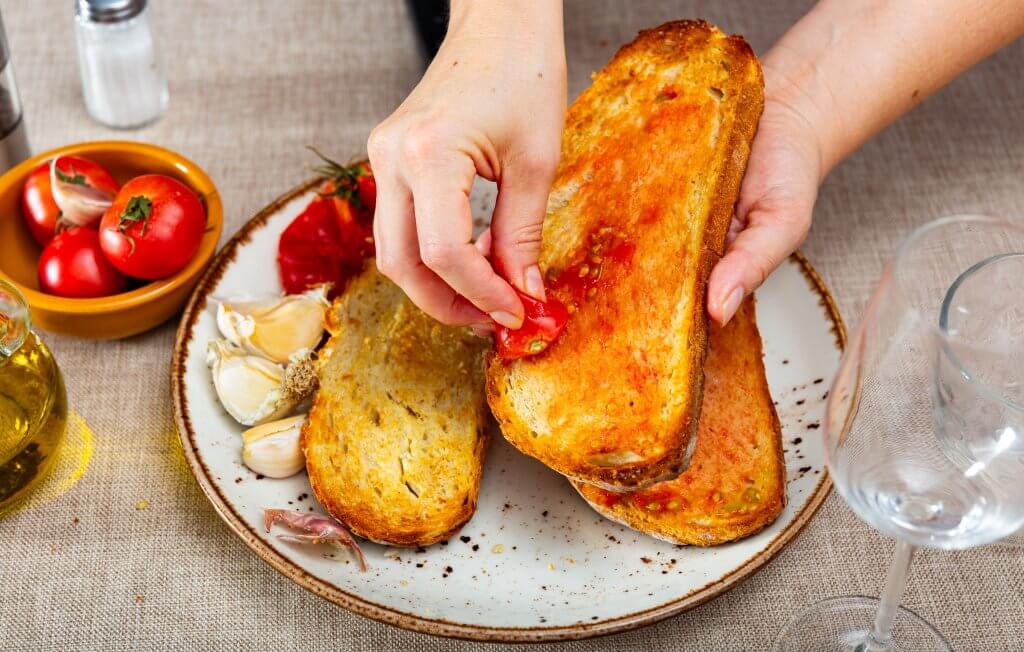
Pa amb Tomàquet: Pa amb tomàquet, also known as pan con tomate, is a traditional Catalan bread dish that is a staple in Barcelona’s food scene. This simple yet delicious dish consists of toasted bread rubbed with garlic and ripe tomato, then drizzled with olive oil and sprinkled with salt. Traditionally, stale bread is used in pa amb tomàquet, showcasing culinary resourcefulness.
Botifarra amb Mongetes: A hearty dish of grilled sausages served with white beans, often seasoned with garlic and parsley.
Calçots: If you’re visiting in from November to March, don’t miss these grilled spring onions, typically served with romesco sauce.
Authentic pan con tomate
Olive Oil in Catalan Cuisine
Olive oil is an essential ingredient in Catalan cuisine, and it’s often referred to as “liquid gold” due to its rich flavor and numerous health benefits. Extra virgin olive oil, in particular, is highly prized in Catalonia for its delicate flavor and high quality. It’s used liberally in many traditional Catalan dishes, including pa amb tomàquet, escalivada, and romesco sauce. The use of olive oil in Catalan cuisine is not only a matter of taste but also a reflection of the region’s rich cultural heritage and its strong connection to the Mediterranean diet.
Sweet Endings
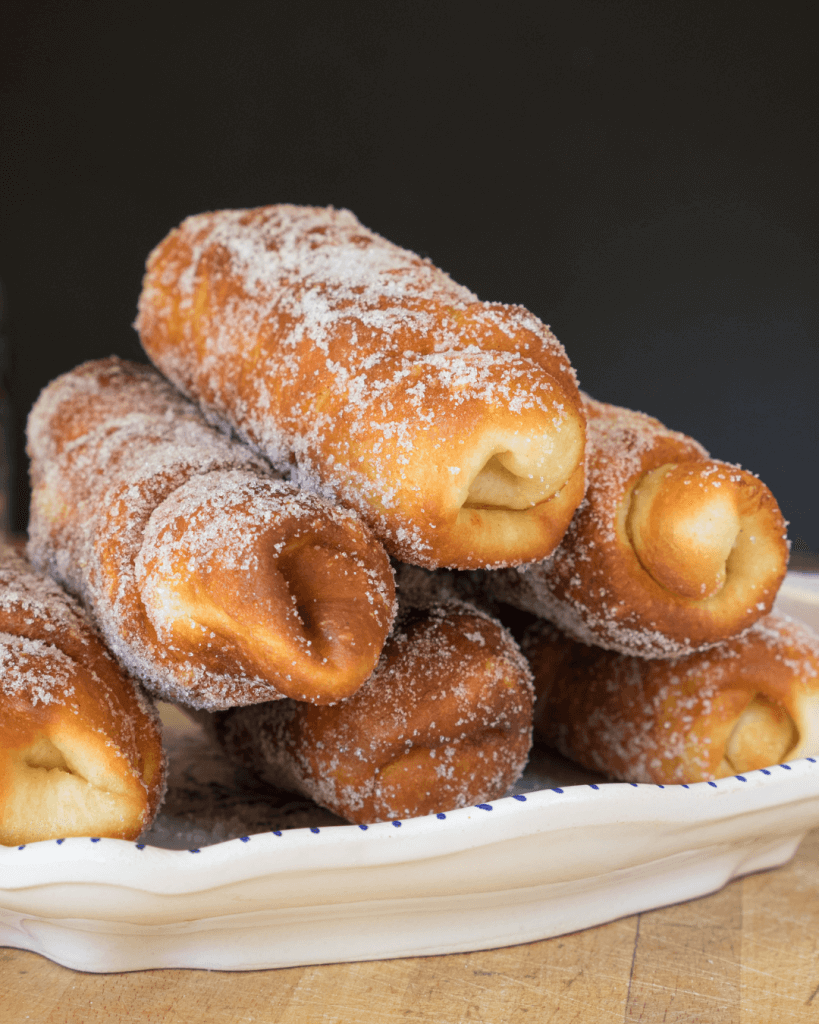
Xuixos
Satisfy yoursweet tooth with these traditional Catalan desserts:
Crema Catalana: Similar to crème brûlée, this creamy custard is infused with citrus and cinnamon, topped with a layer of caramelized sugar.
Mel i Mató: A simple dessert of fresh cheese drizzled with honey, often served with walnuts.
Xuixos: These deep-fried pastries filled with crema catalana have become a breakfast favourite in Barcelona. Think of them as Catalunya’s answer to the croissant—but even more indulgent.
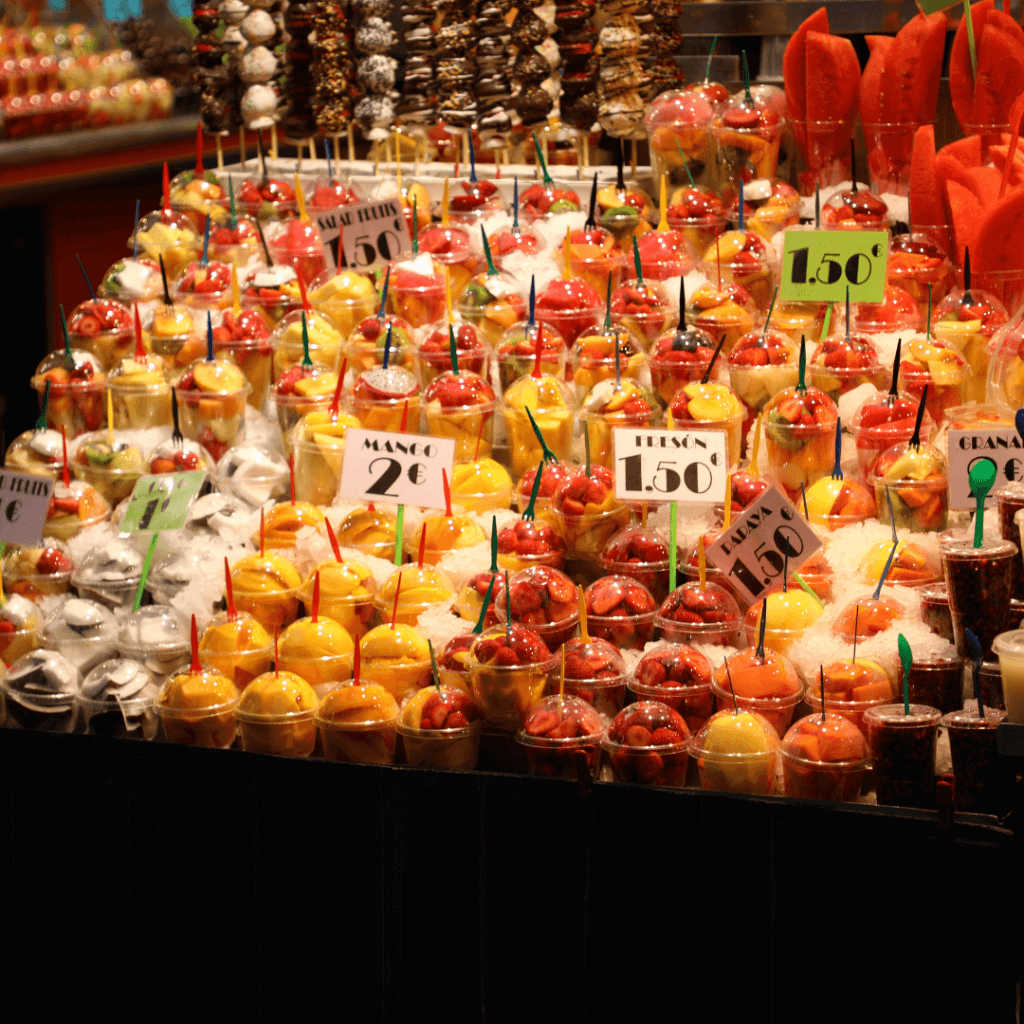
Fresh Fruits at Boqueria Market
Where to Eat in Barcelona
Food Markets
La Boqueria: This iconic market off La Rambla is a feast for the senses. Don’t miss Bar Pinotxo for some of the best tapas in town.
Santa Caterina Market: Less crowded than La Boqueria, this market is known for its undulating, colourful roof and excellent local produce.
Bar del Pla: A stylish tapas bar in the Gothic Quarter, known for its mix of classic and innovative dishes.
Quim de la Boqueria: Located in La Boqueria market, this stall serves some of the best market-fresh cuisine in the city.
El Xampanyet: A must for those looking for authentic Spanish tapas.
La Cova Fumada: A hidden gem known for the best bomba in town.
Enjoy a pint-sized tapas bars on Carrer de Blai, with a wide range of tasty tapas.
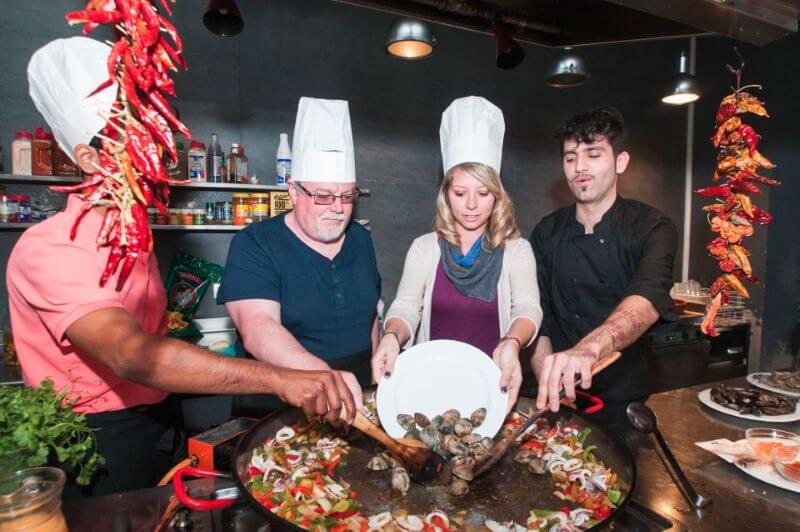
Paella Cooking Class
Culinary Experiences
To truly immerse yourself in Barcelona’s foodculture, consider these experiences:
Cooking Classes: Learn to make paella, fideuà, or traditional tapas in a hands-on class and discover the different types of olive oil used in Barcelona’s cuisine, from extra virgin olive oil to arbequina oil.
Food Tours: Join a guided tour to discover hidden culinary gems and learn about the city’s food history.
Wine or Beer Tasting: Sample local Catalan wines and cava at a bodega or wine bar.
Tips for the Perfect Barcelona Food Experience
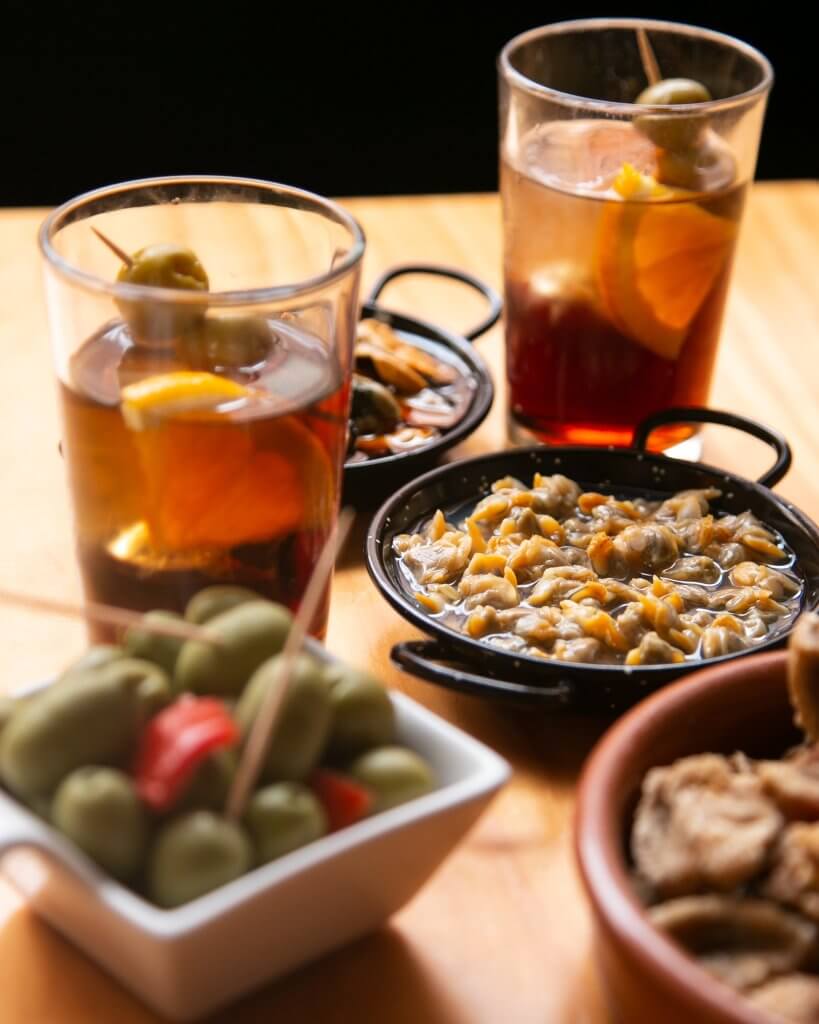
Vermut is served as an aperitif before lunch
Tip
Detail
Eat on local time
Lunch starts at 2 PM; dinner rarely before 9 PM
Order the Menú del Día
Fixed-price lunch menus offer 2–3 courses plus a drink for €12–€18
Join Vermut Hour
Pre-lunch vermouth and tapas, especially popular on Sundays
Book ahead
Reserve popular restaurants in advance, particularly for weekend dinners
Go beyond La Rambla
The best food is often found in Poble Sec, Gràcia, and Barceloneta
Enjoy your tapas experience!
FAQ: Barcelona Food
What is the most famous food in Barcelona? Pa amb tomàquet (bread with tomato) and seafood paella are Barcelona’s most iconic dishes. Pa amb tomàquet accompanies nearly every meal, while paella is the city’s most recognisable main course.
Is Barcelona expensive for food? Barcelona offers options at every price point. A Menú del Día lunch costs €12–€18 for multiple courses. Tapas portions typically range from €4–€10 each. Fine dining can cost €80–€150 per person.
What time do people eat in Barcelona? Lunch is served from 1:30 PM to 3:30 PM. Dinner starts around 9 PM and often runs until 11 PM or later. Many restaurants close between lunch and dinner service.
Where is the best area to eat in Barcelona? Poble Sec (especially Carrer de Blai for pintxos), Barceloneta (for seafood), the Gothic Quarter (for traditional tapas bars), and the area around Santa Caterina Market all offer excellent dining.
Is Barcelona good for vegetarians? Yes. Catalan cuisine features many vegetable-forward dishes, including pa amb tomàquet, escalivada (roasted vegetables), pimientos de padrón, calçots, and patatas bravas. Most restaurants offer vegetarian tapas options.