Hello there, fellow travellers.
Madrid is a captivating tapestry of history, art, and vibrant culture that effortlessly blends tradition with modernity. As Spain’s dynamic capital city, it stands proud with its world-class art museums, iconic plazas, and stunning architecture that tells stories of imperial grandeur. For first-time visitors with just two days in Madrid, Spain, it offers an ideal introduction to Spanish life that will leave you enchanted and planning your return.
The beauty of central Madrid lies in its compact, walkable city centre where centuries of history unfold at every corner. The excellent metro system and affordable public transport options make exploring beyond the centre a breeze, allowing you to experience both famous landmarks and authentic neighbourhoods with ease.
What sets Madrid apart from other European capitals is its unique rhythm of life. Here, traditional tapas bars stand alongside cutting-edge culinary hotspots, while the majestic Royal Palace of Madrid contrasts with trendy neighbourhoods where nightlife continues until dawn. The city pulses with an energy that’s infectious, inviting visitors to visit Madrid and immerse themselves in its distinctive charm.
Even with just two days in Madrid, Spain, you can experience its cultural treasures – from the artistic masterpieces of the Golden Triangle of Art to the peaceful oasis of Retiro Park. The city’s grand boulevards like Paseo del Prado and intimate plazas such as Plaza de España, Plaza Mayor, and Plaza de Cibeles create perfect backdrops for people-watching and soaking in the authentic Madrileño atmosphere.
As Spain’s beating heart, Madrid welcomes art lovers, food enthusiasts, and history buffs with equal warmth. Iconic sights like Puerta del Sol, Calle Mayor, Calle de Alcalá, and the Strawberry Tree (El Madroño) await your discovery, promising memorable encounters with Spanish heritage and contemporary life.
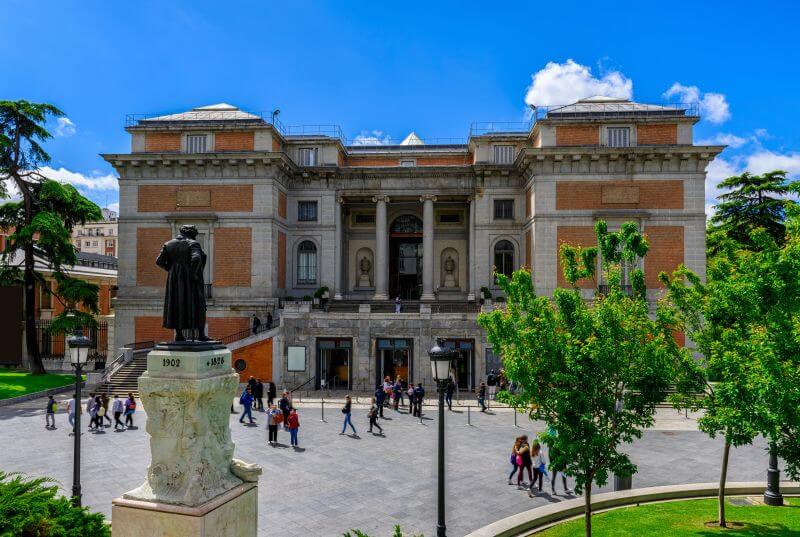
Planning ahead is key to maximising your Madrid itinerary. For popular attractions like the Prado Museum, Reina Sofia Museum, and Royal Palace of Madrid, purchasing tickets ahead online is highly recommended. The official websites often offer timed entry slots that allow you to skip queues, which can be substantial during peak seasons.
Season | Temperature | Crowds | Best For |
|---|---|---|---|
Spring (April-May) | Mild, pleasant | Moderate | Most comfortable exploring |
Summer (June-August) | Very hot (>35°C) | High | Extended daylight hours |
Autumn (September-October) | Mild, pleasant | Moderate | Ideal weather, fewer tourists |
Winter (November-March) | Cool but sunny | Low | Budget-friendly, festive atmosphere |
For first-time visitors, accommodation in central Madrid provides the perfect base. The areas around Puerta del Sol, Plaza Mayor, or Gran Vía put you within walking distance of major attractions. For a more local experience with excellent dining options, consider the charming neighbourhoods of La Latina or Malasaña, both offering character and authenticity while remaining well-connected by public transport.
Consider booking a food tour early in your stay to orient yourself with Madrid’s culinary scene. The Devour Madrid food tours (€89-€119 per person) come highly recommended and introduce you to authentic tapas bars while explaining Spanish dining customs. For art lovers, guided tours of the Prado Museum help navigate its massive collection efficiently.
First-time visitors should note Madrid’s distinctive rhythm of daily life. Many shops and smaller businesses close for siesta between 14:00-17:00. Madrileños typically have lunch around 14:00-15:00 and dinner remarkably late by international standards—rarely before 21:00. Museums often close on Mondays, while many restaurants close on Sundays or Mondays. Plan accordingly to avoid disappointment.
Madrid’s calendar brims with colourful festivities throughout the year:
May: San Isidro Festival honours the city’s patron saint with concerts, traditional chulapo costumes, and open-air dancing
Summer: Outdoor cinema and concerts in parks and plazas
October: Festival de Otoño showcases contemporary performing arts
December: Spectacular Christmas lights, Mercado de San Miguel, and the magical Three Kings Parade on January 5th
If your visit coincides with these celebrations, adjust your two day itinerary to embrace these authentic cultural experiences.
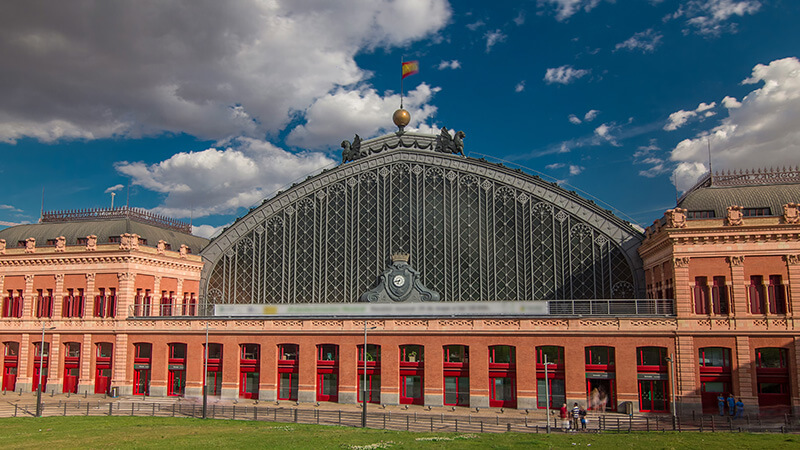
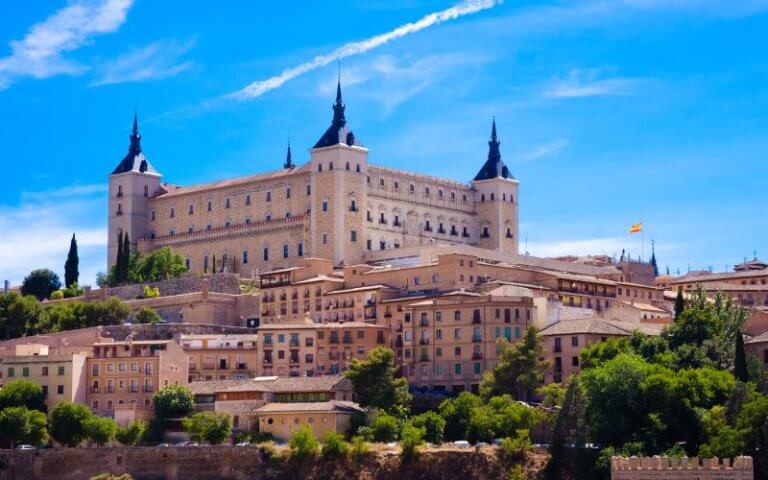
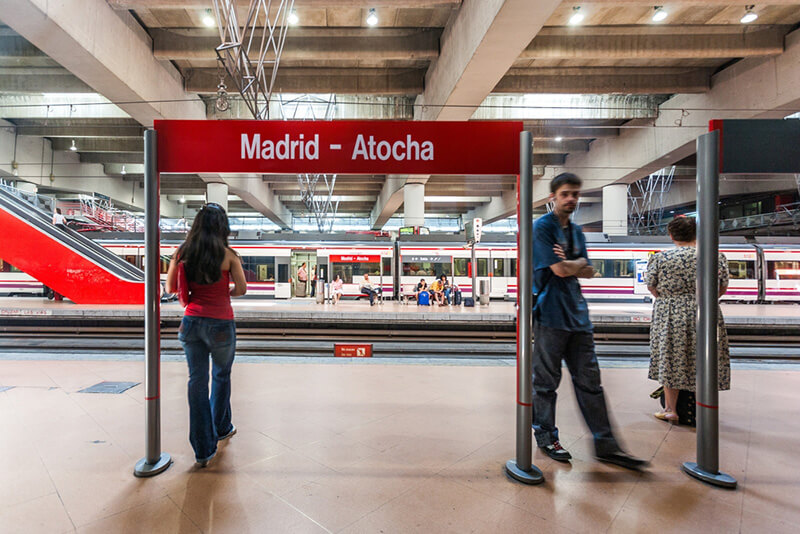
If you have an extra day, the UNESCO World Heritage site of Toledo sits just 33 minutes away by high-speed train from Atocha train station. Tickets start at €14 each way and should be booked in advance through Renfe, Spain’s national railway company.
Most international visitors arrive at Adolfo Suárez Madrid–Barajas Airport (MAD), located approximately 13km northeast of the city centre. Getting from the airport to your accommodation is straightforward with several efficient options:
Transport | Cost | Duration | Hours | Best For |
|---|---|---|---|---|
Metro Line 8 | €5 (includes airport supplement) | 30-45 min | 6:00-1:30 | Budget travellers |
Airport Express Bus | €5 | ~40 min | 24 hours | Convenience with luggage |
Official Taxi | €30 flat rate* | 25-35 min | 24 hours | Groups, comfort |
*Flat rate applies to destinations within the M-30 ring road, which includes the entire city centre. |
|
|
|
|
The Airport Express Bus operates every 15-20 minutes during the day and every 35 minutes overnight, with stops at Puerta de Alcalá, Plaza de Cibeles, and Atocha train station.
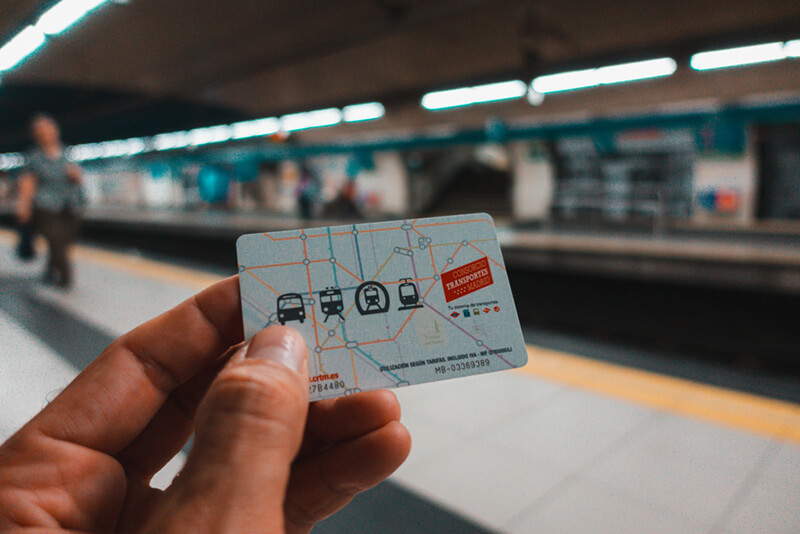
Madrid’s comprehensive public transportation network makes exploring the city easy and convenient. Visitors can purchase a Tourist Travel Pass, valid for 1, 2, 3, 5, or 7 days, from any metro station, tobacco shop (estanco), or tourist information centre. A 2-day pass costs €14.20 and allows unlimited travel on metro, buses, and suburban trains within the central zones. Passes are available as a paper ticket or loaded onto a reloadable Multi card (€2.50 extra for the card itself), making it simple to hop from one attraction to the next without hassle.
For those looking to combine transport with sightseeing, the Turbopass Madrid City Pass offers significant benefits. Alongside unlimited public transport, it provides free or discounted entry to many of Madrid’s top attractions, such as the Prado Museum, Royal Palace of Madrid, and Reina Sofia Museum. The pass also allows visitors to skip the queues at popular sites, saving valuable time on a short itinerary.
Available in 1-, 2-, 3-, 5-, or 7-day options, the City Pass is ideal for first-time visitors or anyone planning a two-day itinerary in Madrid. Whether exploring the city centre, strolling along Paseo del Prado, or discovering vibrant neighbourhoods, the Turbopass ensures a smooth and efficient experience while making the most of your visit.actions.
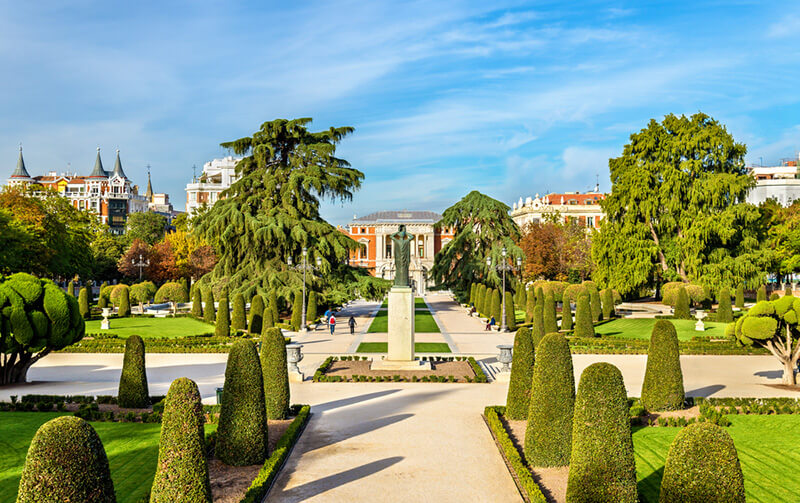
Begin your adventure with a peaceful morning in Retiro Park, the city’s green lung and former royal garden. Open daily from 6:00 to 22:00 in summer (closing at 21:00 in winter), this 125-hectare oasis provides a perfect introduction to the city’s rhythms.
As morning light filters through the trees, join locals jogging or practising tai chi around the park’s central lake. For €6, rent a rowboat for 45 minutes from the small dock and enjoy unique views of the Crystal Palace (Palacio de Cristal) and rose garden (Palacio de Velázquez) from the water. Seek out the Fallen Angel Statue, the only public tribute to Lucifer in the world, situated at 666 metres above sea level.
Must-see spots in Retiro Park:
Palacio de Cristal (Crystal Palace): A magnificent glass pavilion inspired by London’s Crystal Palace, built in 1887 as a greenhouse and now hosting temporary art exhibitions curated by the Reina Sofia Museum
Palacio de Velázquez: Another stunning exhibition space surrounded by rosebeds and manicured gardens
Fallen Angel Statue (Ángel Caído): The curious monument reportedly the only public tribute to Lucifer in the world, situated at exactly 666 metres above sea level according to local lore
As midday approaches, exit the park near the Puerta de Alcalá and head to one of Madrid’s famed art museums, ideally having pre-booked your tickets to avoid queues.
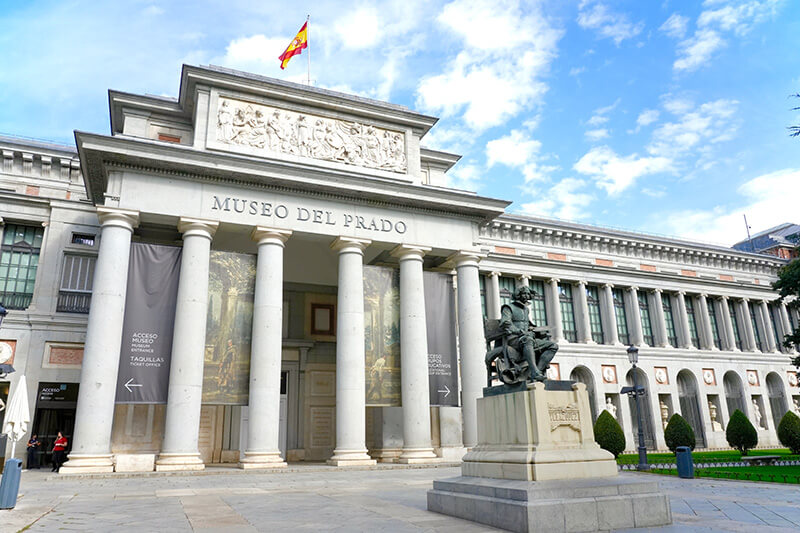
Madrid’s reputation as an art capital is well-deserved, with its Golden Triangle of Art housing some of the world’s most important collections. With limited time, focus on one museum that best matches your interests:
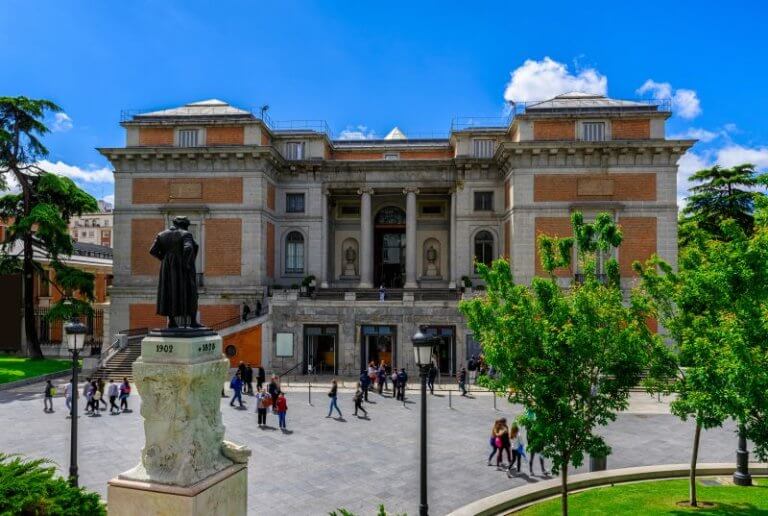
Location: Paseo del Prado, s/n
Hours: Monday-Saturday 10:00-20:00, Sunday 10:00-19:00
Admission: €15 (free daily from 18:00-20:00 Monday-Saturday and 17:00-19:00 on Sundays, but expect long queues)
The Prado houses masterpieces by Velázquez (including “Las Meninas”), Goya’s “Black Paintings,” Bosch’s “Garden of Earthly Delights,” and works by Titian, Rubens, and El Greco.
Location: Calle de Santa Isabel, 52
Hours: Monday and Wednesday-Saturday 10:00-21:00, Sunday 10:00-19:00, closed Tuesdays
Admission: €12 (free Monday, Wednesday-Saturday 19:00-21:00 and Sunday 13:30-19:00)
Home to Picasso’s monumental “Guernica,” plus extensive collections of Dalí, Miró, and other 20th-century Spanish artists.
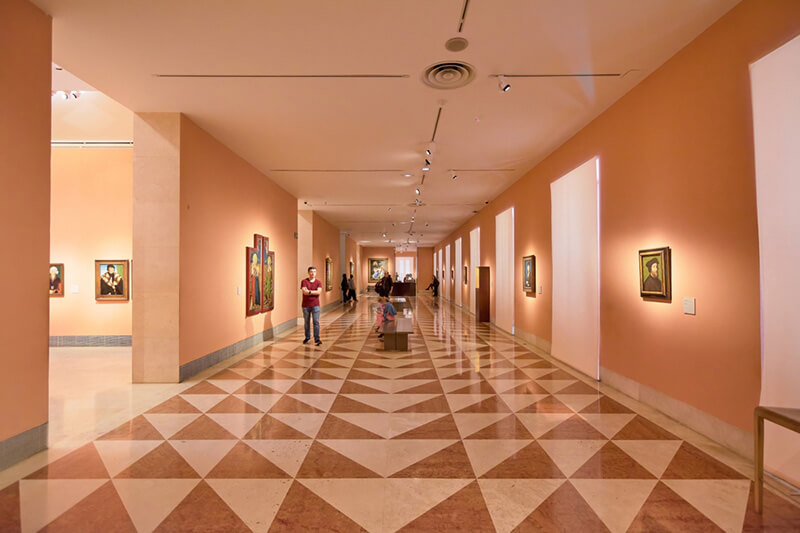
Location: Paseo del Prado, 8
Hours: Tuesday-Sunday 10:00-19:00, Monday 12:00-16:00
Admission: €13 (free Mondays)
A comprehensive collection spanning from 13th-century Italian Gothic to 20th-century Pop Art, filling gaps in the collections of its neighbouring museums.
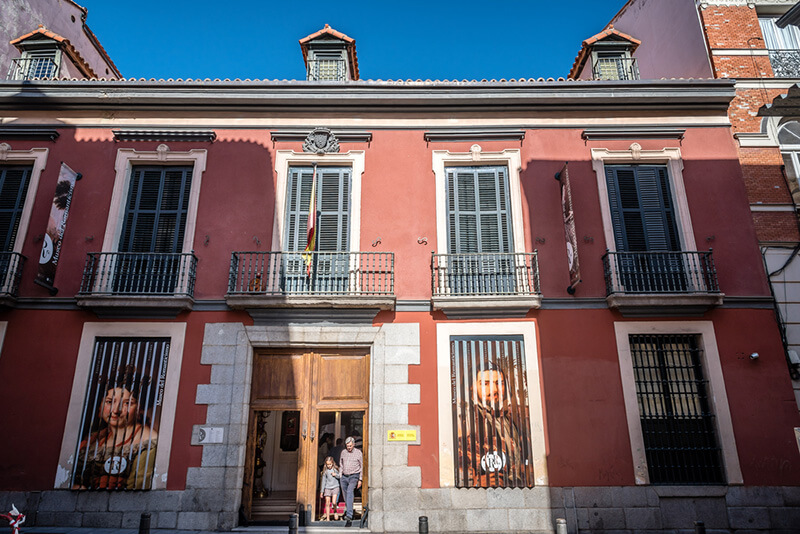
For those seeking something beyond the main museums, Madrid offers excellent alternatives:
Museo del Romanticismo (Calle de San Mateo, 13): A charming museum housed in a 19th-century mansion showcasing how the upper class lived during Spain’s Romantic period. Open Tuesday-Saturday 9:30-18:30, Sunday 10:00-15:00. Admission €3 (free Saturday after 14:00 and all day Sunday). The museum’s hidden garden café offers one of Madrid’s most peaceful spots for coffee.
CaixaForum (Paseo del Prado, 36): A striking cultural centre in a converted power station featuring innovative temporary exhibitions. Open daily 10:00-20:00, admission €6 (varies by exhibition). The vertical garden on its exterior wall is an attraction in itself.
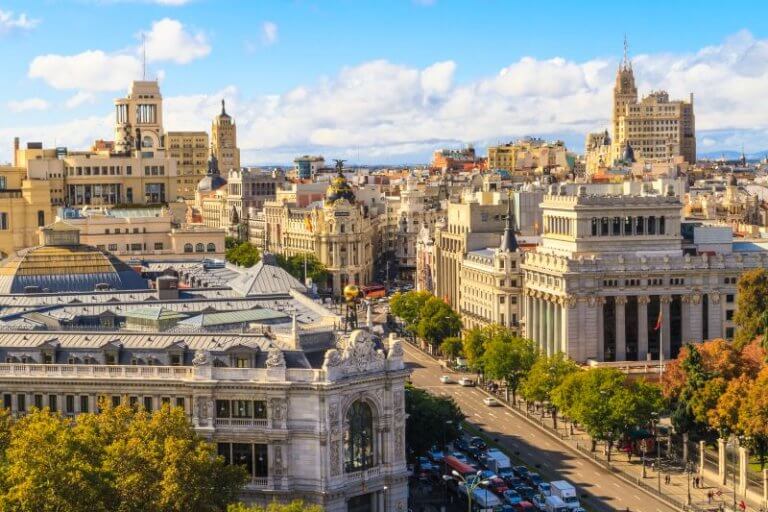
After immersing yourself in art, take a leisurely stroll down Paseo del Prado, one of Madrid’s grandest boulevards. Stop to admire the ornate Cibeles Fountain featuring the goddess Cybele in a chariot pulled by lions, which serves as a symbolic heart of the city where Real Madrid fans celebrate their victories.

As evening approaches, head to La Latina for tapas hopping. Explore Cava Baja, home to traditional tapas bars like Casa Lucio, Juana La Loca, and La Perejila. For dessert, try Churros con Chocolate at Chocolatería San Ginés or Vermut de Grifo at Bodegas Ricla. Conclude at San Miguel Market (Mercado de San Miguel) for gourmet treats.
Start your culinary adventure on Cava Baja, the neighbourhood’s gastronomic heart lined with traditional tabernas and contemporary tapas bars.
Restaurant | Specialty | Hours | Price Range |
|---|---|---|---|
Casa Lucio (Calle Cava Baja, 35) | Huevos estrellados (broken eggs over fried potatoes) | 13:00-16:00, 20:00-24:00 daily | €15-25 |
Juana La Loca (Plaza Puerta de Moros, 4) | Creative pintxos and tortilla de patatas | 13:00-16:00, 20:00-00:00, closed Mon | €3-8 |
La Perejila (Calle Cava Baja, 25) | Excellent croquetas | 13:00-16:30, 20:00-00:00, closed Wed | From €4 |
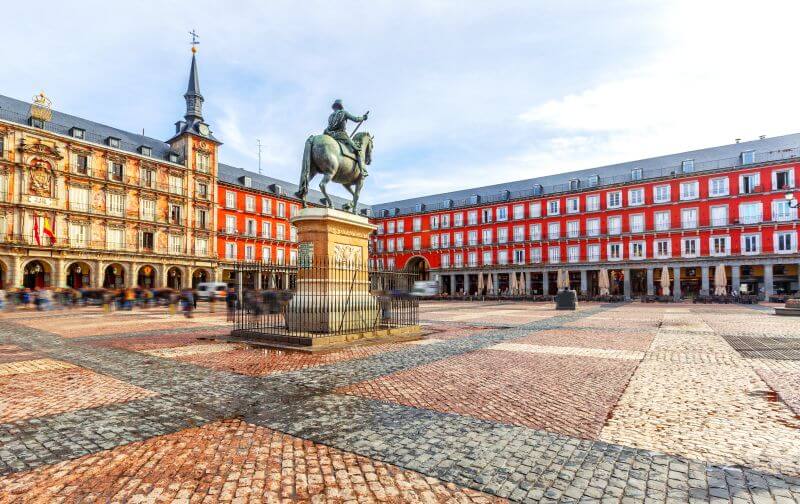
As the evening progresses, wander toward Plaza Mayor, Madrid’s grand 17th-century square surrounded by elegant balconied buildings. Once the venue for bullfights, public executions, and coronations, today it’s filled with café terraces perfect for people-watching. While prices here are higher than elsewhere, the atmospheric surroundings justify stopping for a glass of vermouth or sangría.
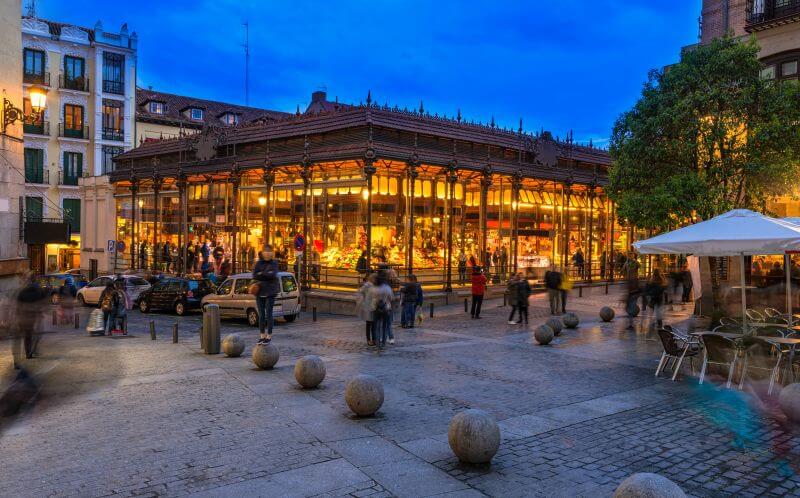
End your first night at the nearby Mercado de San Miguel (Plaza de San Miguel), an elegant iron-and-glass market building from 1916 that now houses gourmet food stalls. Open Sunday-Thursday 10:00-midnight and Friday-Saturday 10:00-1:00, it offers everything from fresh oysters and ibérico ham to regional cheeses and sweet pastries, making it ideal for an impromptu dinner of varied Spanish delicacies.
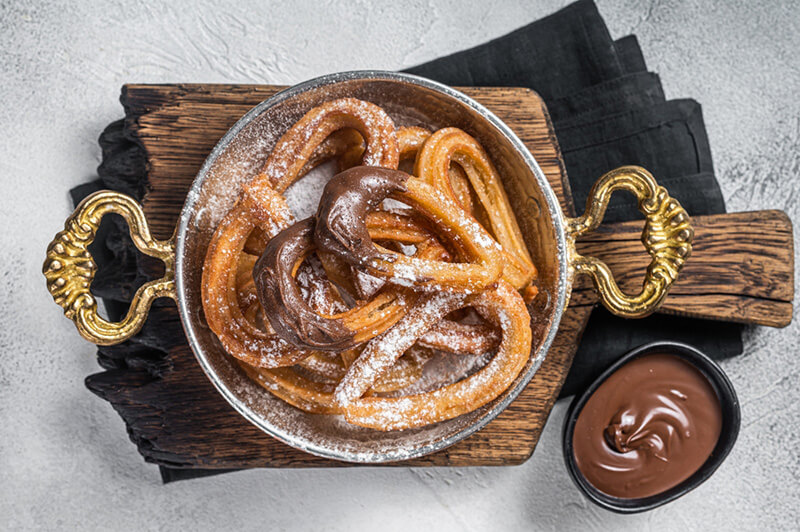
Beyond the standard tapas, seek out these authentic Madrid specialties:
Cocido Madrileño: This hearty chickpea stew with meat and vegetables represents Madrid’s culinary soul. Traditionally served in three courses (broth, chickpeas/vegetables, and meats separately), try it at La Bola (Calle de la Bola, 5) where they’ve been making it in individual clay pots since 1870.
Bocadillo de Calamares: This simple sandwich of fried squid rings in crusty bread is a Madrid classic, best enjoyed around Plaza Mayor. Bar La Campana (Calle de Botoneras, 6) serves one of the city’s most famous versions for around €3.50.
Churros con Chocolate: For the perfect sweet treat, visit the legendary Chocolatería San Ginés (Pasadizo de San Ginés, 5), open 24 hours and serving thick hot chocolate with crispy churros since 1894.
Vermut de Grifo: Draft vermouth is Madrid’s traditional aperitif, typically served with an olive and a slice of orange. Try it at Bodegas Ricla (Calle de los Cuchilleros, 6), a time-capsule bar dating from 1867.
Focus on one of the art museums that best matches your interests:
Prado Museum: Houses masterpieces by Francisco Goya, Peter Paul Rubens, and others.
Reina Sofia Museum: Home to Picasso’s “Guernica” and modern Spanish art.
Museo Thyssen-Bornemisza: Extensive collection from Italian Gothic to 20th-century Pop Art.
For a quieter experience, visit Museo del Romanticismo or CaixaForum. Afterward, stroll down Paseo del Prado, stopping at Cibeles Palace and the fountain where Real Madrid fans celebrate victories.
Head to La Latina for tapas hopping. Explore Cava Baja, home to traditional tapas bars like Casa Lucio, Juana La Loca, and La Perejila. For dessert, try Churros con Chocolate at Chocolatería San Ginés or Vermut de Grifo at Bodegas Ricla. Conclude at San Miguel Market (Mercado de San Miguel) for gourmet treats.
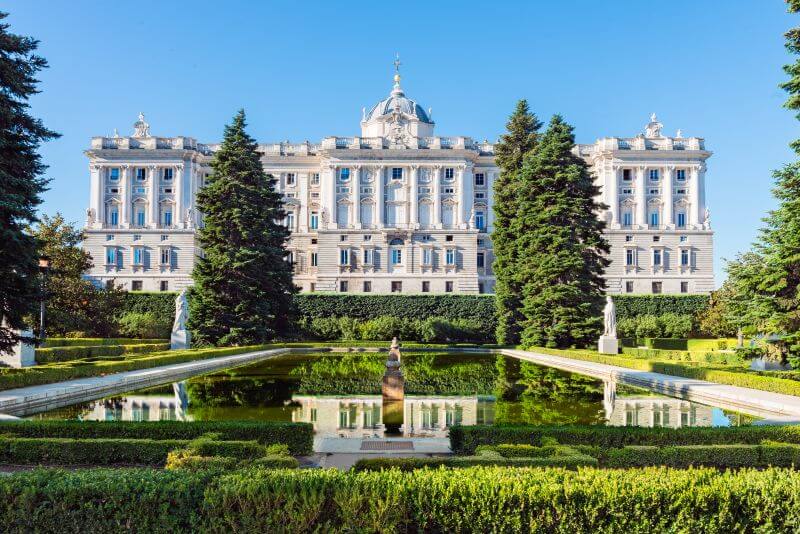
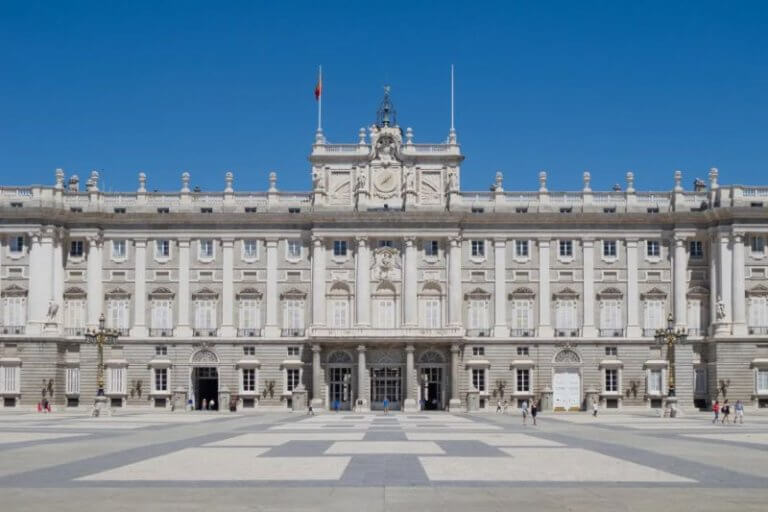
Begin your second day exploring Madrid’s royal heritage with a visit to the magnificent Palacio Real (Royal Palace), Spain’s largest royal palace with over 3,000 rooms. Although still the official residence of the Spanish Royal Family, it’s primarily used for state ceremonies while the royals actually live in the more modest Zarzuela Palace outside the city.
Palacio Real Details:
Address: Calle de Bailén, s/n
Hours: October-March 10:00-18:00, April-September 10:00-20:00 (closed during state functions)
Admission: €13 basic ticket, €16 with guided tour
Highlights: Throne Room, Royal Armoury, Royal Pharmacy, and Stradivarius Room housing the royal collection of string instruments
Pre-book your tickets online to avoid queues and arrive early to enjoy smaller crowds. The guided tour offers fascinating insights into Spain’s royal history and the palace’s artistic treasures, including frescoes by Tiepolo and paintings by Velázquez, Goya, and Caravaggio.
After touring the palace, visit the adjacent Catedral de la Almudena, Madrid’s main cathedral. Surprisingly modern compared to other European cathedrals, it was only completed in 1993 after more than a century of construction. Its unusual neo-Gothic exterior contrasts with a bright, colourful neo-Romanesque interior. Entry to the main cathedral is free, while the museum and dome (offering excellent city views) cost €6.
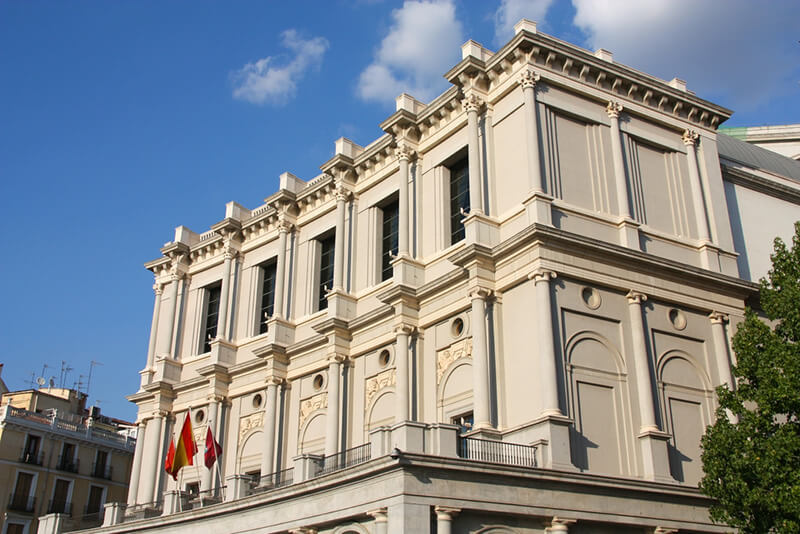
From the cathedral, walk to Plaza de Oriente, an elegant square lined with statues of Gothic kings facing the palace. The square offers excellent photo opportunities of both the palace and the nearby Teatro Real (Royal Theatre), Spain’s premier opera house.
Continue your royal-themed morning with a short walk to Puerta del Sol, Madrid’s most famous square and the official centre of Spain (Kilometre Zero, from which all national roads are measured). Look for the famous statue of El Oso y El Madroño (The Bear and the Strawberry Tree), the symbol of Madrid, and the clock tower whose bells traditionally ring in the New Year while Spaniards eat twelve lucky grapes.
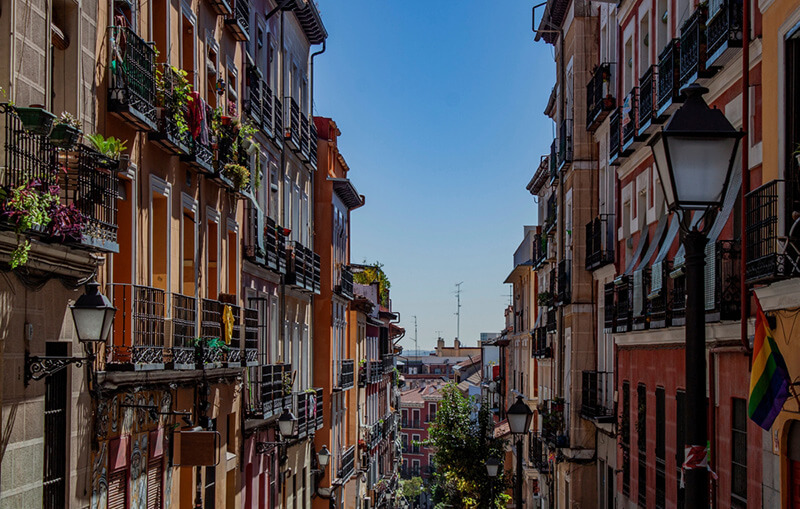
For lunch, head to the historic Mercado de San Fernando in the multicultural Lavapiés neighbourhood (Calle de Embajadores, 41). Open Tuesday-Saturday 10:00-22:00 and Sunday 11:00-17:00, this local market offers a more authentic experience than the touristy Mercado de San Miguel. Sample international cuisines alongside traditional Spanish dishes, reflecting the diverse community of the area.
After lunch, explore Lavapiés itself, one of Madrid’s most colourful and diverse neighbourhoods. Once the Jewish quarter, today it’s home to communities from around the world, creating a vibrant cultural melting pot. The area’s street art, independent shops, and global restaurants make it perfect for an afternoon stroll off the typical tourist path.
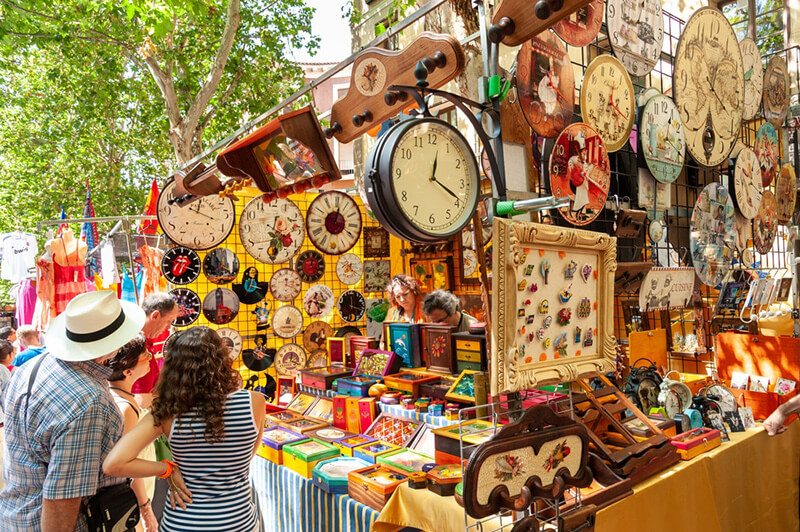
Take some time to discover Madrid’s diverse shopping options, each district offering its own distinctive character:
Salamanca District: Often called Madrid’s “Golden Mile,” the streets of Serrano, Velázquez, and Ortega y Gasset house prestigious Spanish and international fashion brands. Even if your budget doesn’t stretch to Loewe or Balenciaga, window shopping here is a pleasure in itself.
El Rastro: If your visit includes a Sunday morning, don’t miss Madrid’s famous open-air flea market spreading through La Latina from Plaza de Cascorro down Ribera de Curtidores (10:00-15:00). With over 400 years of history, it offers everything from antiques and vintage clothing to contemporary crafts and quirky souvenirs.
Calle Fuencarral: This pedestrianised street connecting Gran Vía to Chueca features trendy Spanish chains like Desigual and Camper alongside independent boutiques. The nearby Mercado de Fuencarral offers alternative fashion, while the surrounding streets house vintage stores and young designers.
Shop | Location | Specialty |
|---|---|---|
Casa de Diego | Puerta del Sol, 12 | Handmade fans and umbrellas |
La Violeta | Plaza de Canalejas, 6 | Violet-flavoured candies in beautiful tins |
Antigua Casa Talavera | Calle de Isabel la Católica, 2 | Traditional Spanish ceramics |
Extra tip: For a unique cultural experience, visit La Tabacalera (Calle de Embajadores, 53), a former tobacco factory converted into a community-run social and cultural centre. Open Tuesday-Sunday 12:00-22:00, it features changing exhibitions of street art, workshops, performances, and a vibrant community atmosphere that represents Madrid’s creative spirit.
As the afternoon progresses, make your way to Templo de Debod, an authentic ancient Egyptian temple dating from the 2nd century BC. Gifted to Spain by Egypt in 1968 as thanks for Spanish help in saving Abu Simbel temples, it was reassembled in Parque del Oeste. The temple and surrounding park (open Tuesday-Sunday 10:00-20:00, closed Mondays) offer spectacular sunset views over Casa de Campo and western Madrid. Arrive about an hour before sunset to secure a good viewing spot.
As your 48 hours in Madrid draw to a close, experience the city’s legendary nightlife with an evening in the vibrant Malasaña neighbourhood. Made famous during La Movida Madrileña, the counter-cultural movement that followed Franco’s dictatorship, today it co hemian charm with hipster cool.
Begin at Plaza del Dos de Mayo, the heart of Malasaña, where numerous terraces offer the perfect spot for an aperitif. From there, explore the surrounding streets lined with vintage shops, independent boutiques, and quirky cafés.
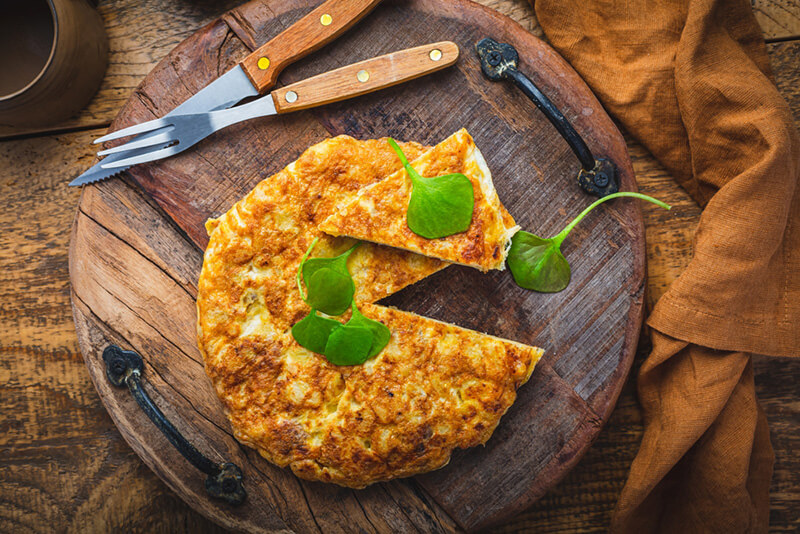
For dinner, try Bodega de la Ardosa (Calle de Colón, 13), a historic tavern dating from 1892 famous for its tortilla de patatas and vermouth on tap. Duck through the tiny entrance to discover its atmospheric interior with original tiles and vintage décor. Open daily 12:00-2:00, it offers authentic Madrid charm with most tapas priced between €3-8.
After dinner, experience Madrid’s cocktail scene at 1862 Dry Bar (Calle del Pez, 27), a speakeasy-style establishment with expert mixologists crafting both classic and innovative cocktails (€10-14 each). Open from 19:00 until late, its vintage ambience perfectly captures Madrid’s blend of tradition and modernity.

No visit to Madrid is complete without experiencing the passionate art of flamenco. While not native to Madrid (it originated in Andalusia), the capital offers some of Spain’s finest performances:
Venue | Location | Show Times | Price | Best For |
|---|---|---|---|---|
Cardamomo | Calle Echegaray, 15 | 18:00, 20:00, 22:00 daily | €39-75 | Intimate setting, top performers |
Casa Patas | Calle de Cañizares, 10 | 22:30 (plus 20:00 Sat) | From €38 | Authentic atmosphere, aficionados |
Corral de la Morería | Calle de la Morería, 17 | 18:30, 20:30, 22:45 | €49.95-74.95 | Oldest tablao (1956), Michelin-starred restaurant |
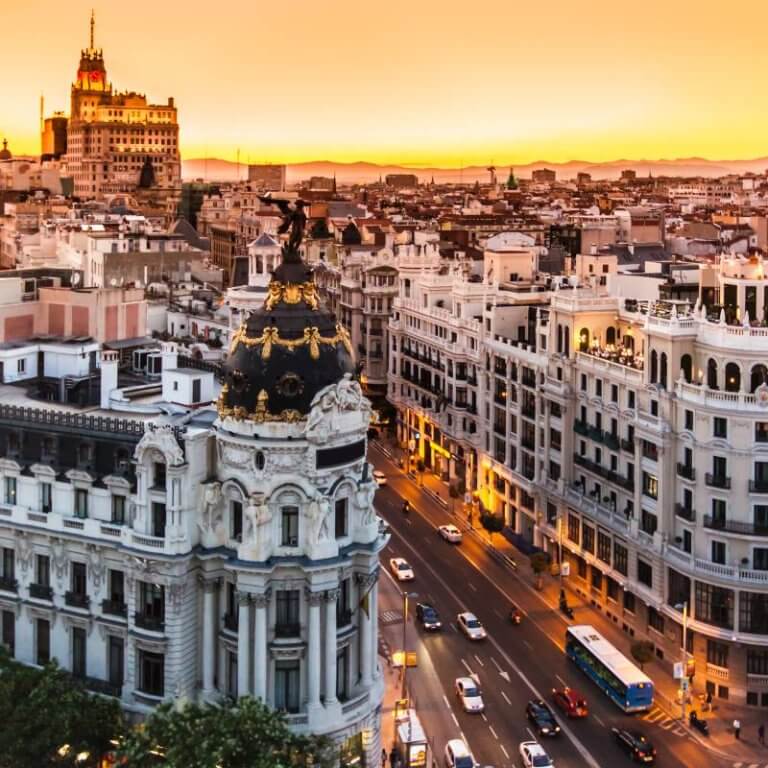
End your Madrid experience with a stroll down Gran Vía, the city’s main thoroughfare often called “Spanish Broadway” for its theatres, cinemas, and illuminated signs. The street comes alive at night with entertainment options ranging from musicals to flamenco shows, offering one last taste of Madrid’s energetic spirit. |
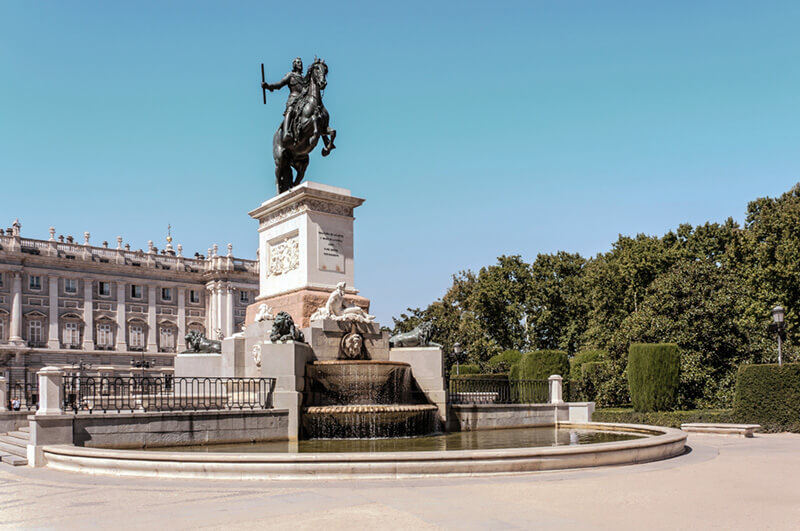
Start with the Royal Palace of Madrid, Palacio Real de Madrid, the largest royal palace in Spain. The official residence of the royal family, it’s primarily used for state ceremonies. Pre-book a guided tour to see highlights like the Throne Room, Royal Armoury, and Stradivarius Room.
Nearby, visit Almudena Cathedral, then Plaza de Oriente and Plaza Mayor. Continue to Puerta del Sol to spot the Strawberry Tree (El Madroño).
Lunch at Mercado de San Fernando, then explore Lavapiés. Visit Templo de Debod before sunset for a scenic walk.
Head to Malasaña, explore Gran Vía, Plaza del Callao, and enjoy dinner at Bodega de la Ardosa. Flamenco enthusiasts can visit Cardamomo, Casa Patas, or Corral de la Morería.
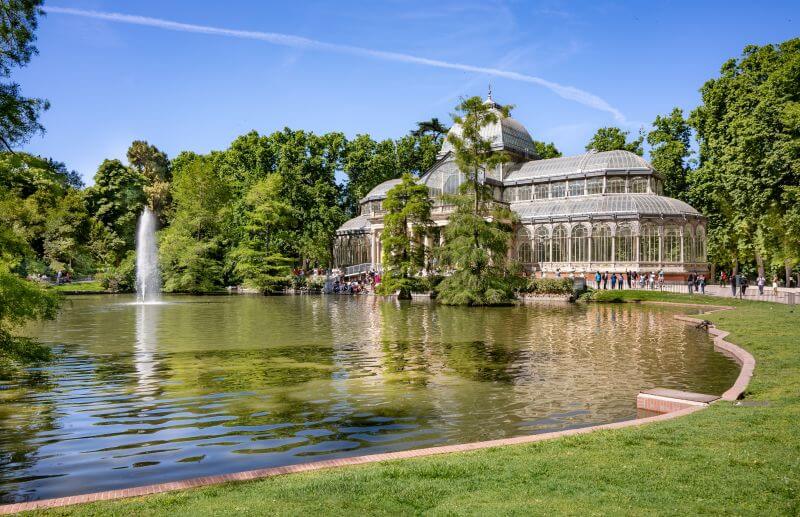
Two days in Madrid may seem brief, but this two day itinerary allows first-time visitors to experience so much history, Spanish art, and the lively spirit of Spain’s capital city. From Parque del Buen Retiro to Palacio de Cristal, from Puerta del Sol to Gran Vía, Madrid leaves a lasting impression.
The city’s walkable centre means you can cover significant ground even in a short visit, while efficient public transport helps maximise your limited time. What makes Madrid special isn’t just its grand monuments or museums, but the distinctive lifestyle that values social connection, gastronomic pleasure, and artistic appreciation.
As you depart, you’ll carry with you memories of art masterpieces and architectural wonders, but perhaps more importantly, you’ll remember the feeling of sitting in a sunlit plaza with a café con leche, watching locals gather for animated conversations, or the joy of discovering a perfect tortilla in a century-old tavern.
Most visitors find themselves planning a return before they’ve even left—there’s always another museum gallery to explore, another neighbourhood to discover, or another seasonal celebration to experience. Madrid doesn’t reveal all its treasures at once, instead inviting you to return and continue your exploration of this captivating capital.