Hello there, fellow traveller.
Munich’s location makes it an ideal base for exploring some of Bavaria’s most remarkable destinations. Within just a couple of hours, travellers can reach fairy tale castles perched on mountain ridges, medieval towns that look like film sets, or alpine lakes so clear you can see straight to the bottom. This sheer variety of extraordinary places – all easily accessible as day trips – is what makes the Bavarian capital particularly special for visitors who want to experience more than just city life.
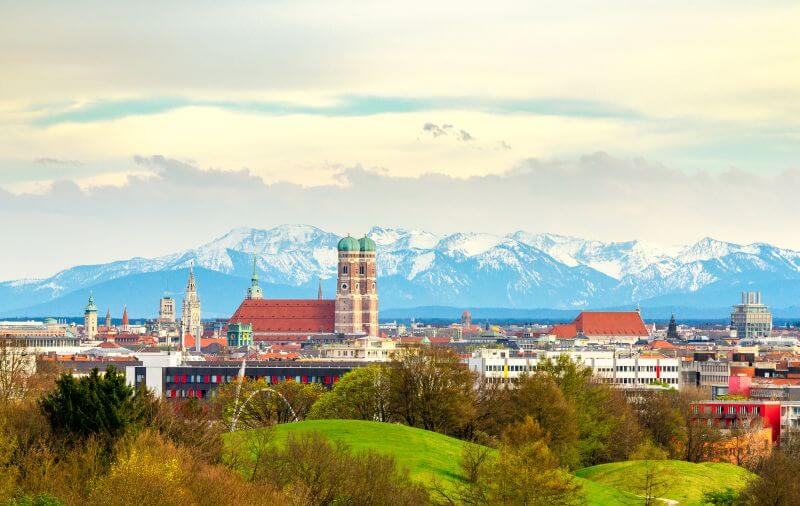
Many travellers spend their entire trip within Munich’s city limits, and while the city itself is a fantastic destination in its own right, they’re missing out on some of Bavaria’s most memorable experiences. The region around Munich offers something genuinely special: a concentration of cultural treasures, natural beauty, and historical significance that’s difficult to match anywhere else in Europe. From King Ludwig II’s fantastical palaces to UNESCO World Heritage towns, from Germany’s highest peak to sobering historical sites that teach us vital lessons about our past – all of this sits within easy reach of your Munich hotel.
In this guide, we will share our recommendations for the best day trips from Munich, covering everything you need to know to plan these excursions with confidence. Whether you’re travelling with family, exploring as a couple, or venturing out solo, these day trips will add remarkable depth to your Munich visit. Munich’s excellent transportation network – including S-Bahn, U-Bahn, regional and intercity trains, and organised bus tours – makes planning these day trips straightforward and convenient.
Address: Neuschwansteinstraße 20, 87645 Schwangau
Distance from Munich: Approximately 120 kilometres
Journey time: Around 2 hours by car or train plus bus
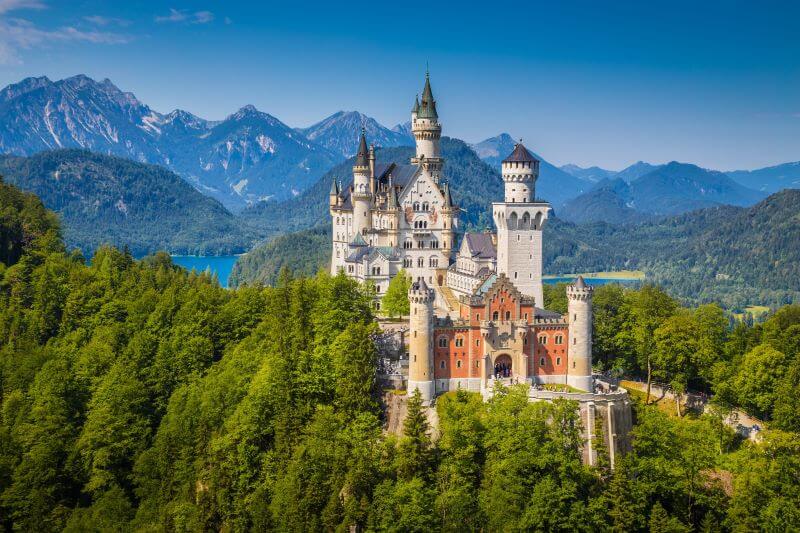
Neuschwanstein Castle sits on a rugged cliff above the village of Hohenschwangau, its white limestone towers rising against a backdrop of alpine peaks. This fairy tale castle, built by King Ludwig II, inspired Disney’s Sleeping Beauty Castle. Seeing it in person reveals something the films can’t capture – the sheer audacity of building something so elaborate in such a dramatic location.
The ‘mad king’ Ludwig II commissioned Neuschwanstein in 1869 as a retreat and homage to Richard Wagner. Ludwig envisioned a medieval knight’s castle, but one equipped with all the modern conveniences of the 19th century. The result is a fascinating blend: rooms decorated with scenes from Germanic legends, yet fitted with central heating, running water on every floor, and even an early telephone system.
Neuschwanstein Castle is the most visited tourist attraction in Bavaria and a popular day trip destination from Munich.
The castle can only be visited on guided tours lasting approximately 30 minutes. Tours are available in English and German, with audio guides offered in numerous additional languages.
Opening hours run from 9:00 AM–6:00 PM in summer (April to mid-October) and 10:00 AM–4:00 PM in winter.
Important: Tickets must be booked well in advance, particularly during summer and at weekends. Online booking through the Bavarian Palace Department is essential: www.hohenschwangau.de
Take a train from Munich Hauptbahnhof to Füssen (approximately 2 hours), then bus 73 or 78 to Hohenschwangau village. From the ticket centre, you can walk uphill (30–40 minutes), take a horse-drawn carriage, or use the shuttle bus. All options leave you with a final 10-minute walk to the castle entrance.
Did you know? King Ludwig II spent fewer than 200 nights in Neuschwanstein before his mysterious death in 1886. The castle was opened to the public just seven weeks after he died, partly to help pay off the enormous debts his building projects had created.
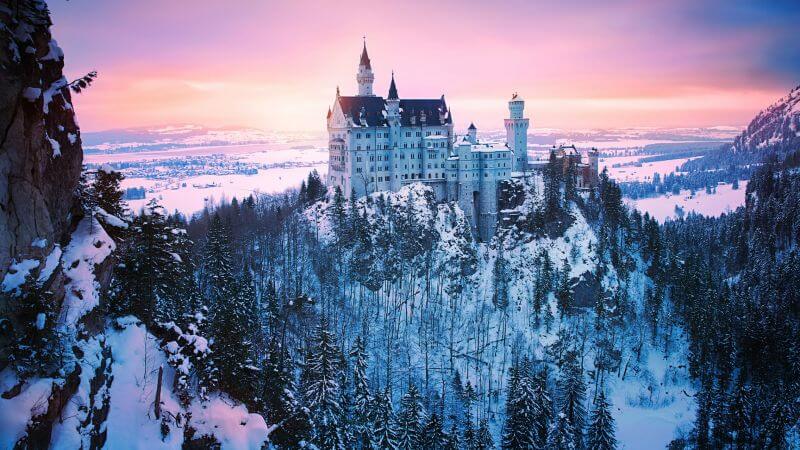
The famous postcard view is from Marienbrücke (Mary’s Bridge), a 10-minute walk from the castle. The village of Hohenschwangau below deserves time as well, with Hohenschwangau Castle offering tours that provide context for understanding Neuschwanstein.
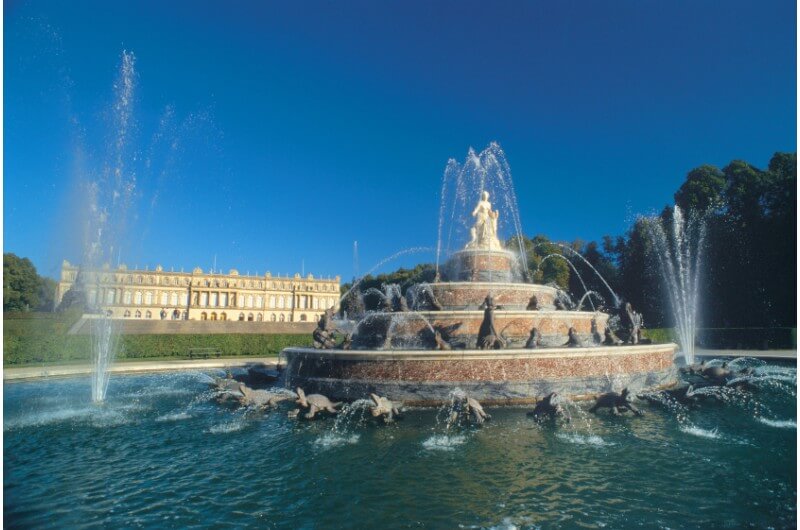
Address: 83209 Herrenchiemsee
Distance from Munich: Approximately 90 kilometres
Journey time: Around 1 hour by car, 1.5 hours by train and ferry
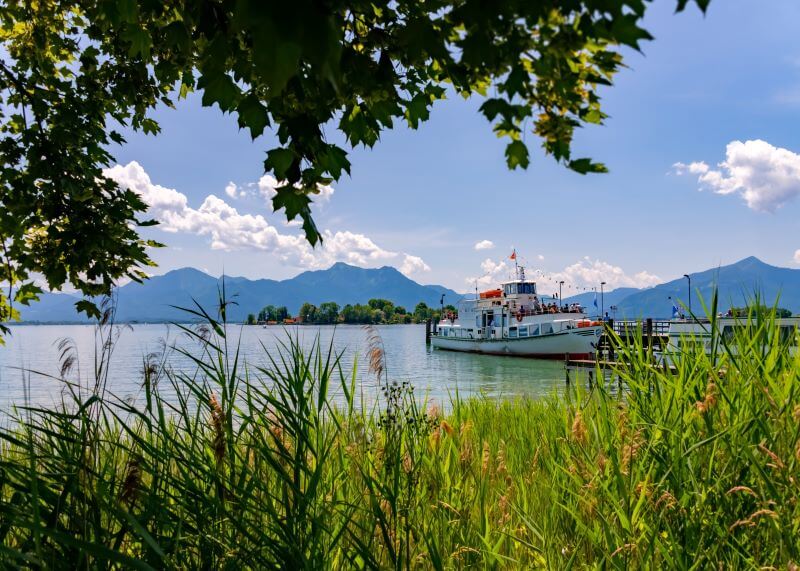
If Neuschwanstein represents Ludwig’s romantic medieval fantasies, Herrenchiemsee is his new palace, reflecting his obsession with absolute monarchy and Louis XIV. Built on an island in Bavaria’s largest lake, this palace was Ludwig’s attempt to recreate – and even surpass – Versailles. Herrenchiemsee Palace is modelled after Versailles and is located on an island in Chiemsee lake.
The great hall, known as the Hall of Mirrors, here is actually longer than its Versailles counterpart at 98 metres. The state bedroom recreates the ceremonial space where French kings held their morning levées. Though never completed, what exists is spectacular.
Access is via guided tour only, lasting approximately 30 minutes in German and English. The palace is open daily from 9:00–18:00 (April to mid-October) and 9:40–16:15 (mid-October to March).
Take a train from Munich Hauptbahnhof to Prien am Chiemsee (approximately 1 hour). From Prien station, take the historic steam train to Prien-Stock harbour, then the ferry to Herreninsel island (ferries run every 30 minutes during high season). The scenic ferry ride across Chiemsee is a highlight of the trip, offering beautiful views of the lake and islands. The walk from the ferry landing to the palace takes about 20 minutes through woodland paths.
Consider also visiting Fraueninsel (Women’s Island), home to a Benedictine abbey founded in 782 AD. The island has a peaceful, timeless atmosphere with a small fishing village and lakeside restaurants serving fresh fish from the Chiemsee.
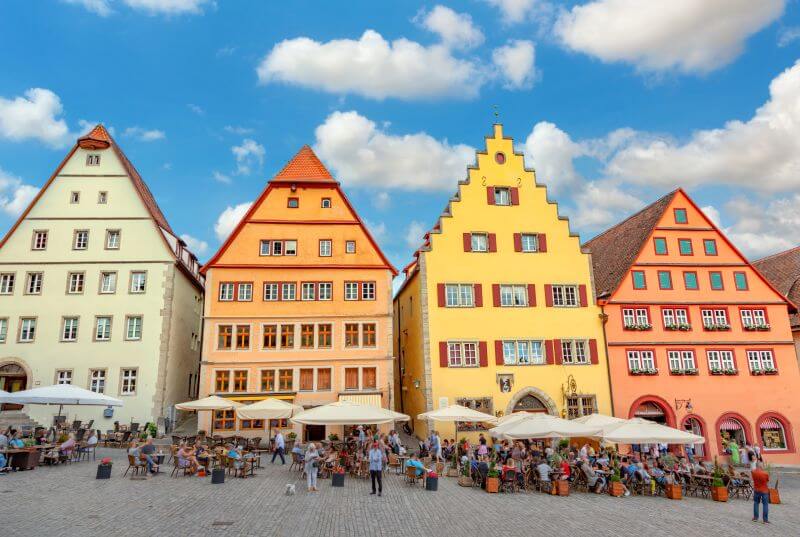
Address: Town centre, 91541 Rothenburg ob der Tauber
Distance from Munich: Approximately 240 kilometres
Journey time: Around 2.5–3 hours by car or train
Rothenburg ob der Tauber is the medieval town people picture when they imagine Germany’s past. Its intact medieval city walls, cobblestone streets, and half-timbered houses create an almost impossibly picturesque scene. Unlike many German towns heavily reconstructed after World War II, Rothenburg’s old town survived largely intact. Rothenburg is part of Germany’s Romantic Road, a famous tourist route known for its scenic medieval villages and charming towns. Rothenburg is also renowned for its medieval old town, well-preserved architecture, and its magical Christmas market. For a more authentic experience and to enjoy the town’s charm without the daytime crowds, it is highly recommended to stay overnight or plan an overnight stay.
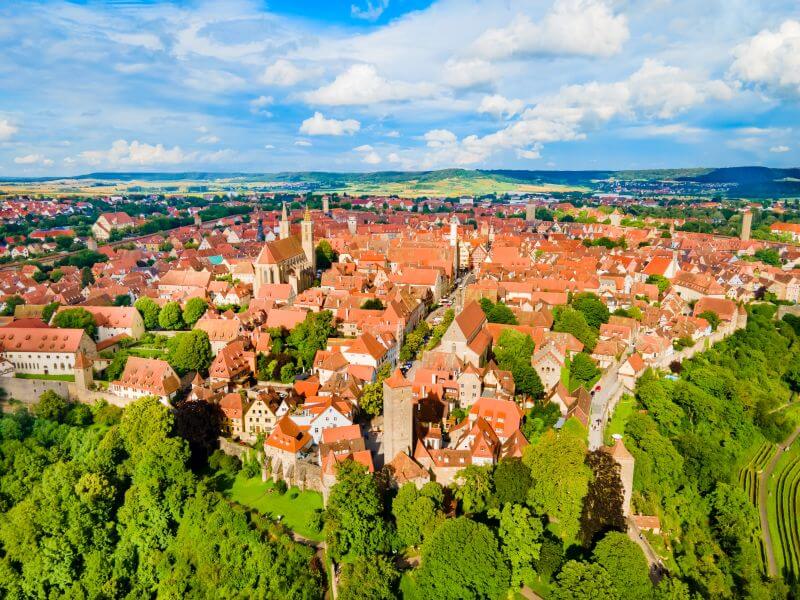
Walking the city walls: Rothenburg’s medieval city walls are largely accessible to visitors. You can walk along covered sections gaining wonderful views over the town’s terracotta roofs. The complete circuit is approximately 2.5 kilometres and takes about an hour.
Plönlein: This intersection with its small half-timbered house and two towers is Rothenburg’s most photographed spot, particularly atmospheric in early morning or late evening.
St. Jakob’s Church houses the Heilig-Blut-Altar, a masterpiece by wood carver Tilman Riemenschneider. The Medieval Crime Museum documents the legal history of medieval Europe with instruments of punishment and explanations of historical legal proceedings. The Town Hall tower offers panoramic views of the town and surrounding Tauber Valley.
Take a train from Munich Hauptbahnhof to Ansbach or Treuchtlingen, then change to a regional train or bus to Rothenburg (approximately 3–3.5 hours with connections). By car, take the A7 northward. Car parks are located outside the old town walls.
Did you know? Rothenburg narrowly escaped destruction in April 1945 when US Assistant Secretary of War John J. McCloy, who had visited as a student, negotiated with local commanders to preserve it. The German garrison surrendered without a fight, sparing the medieval old town.
Rothenburg’s Christmas market (Reiterlesmarkt) transforms the town into a winter wonderland from late November through December. The Käthe Wohlfahrt Christmas Village is open year-round.
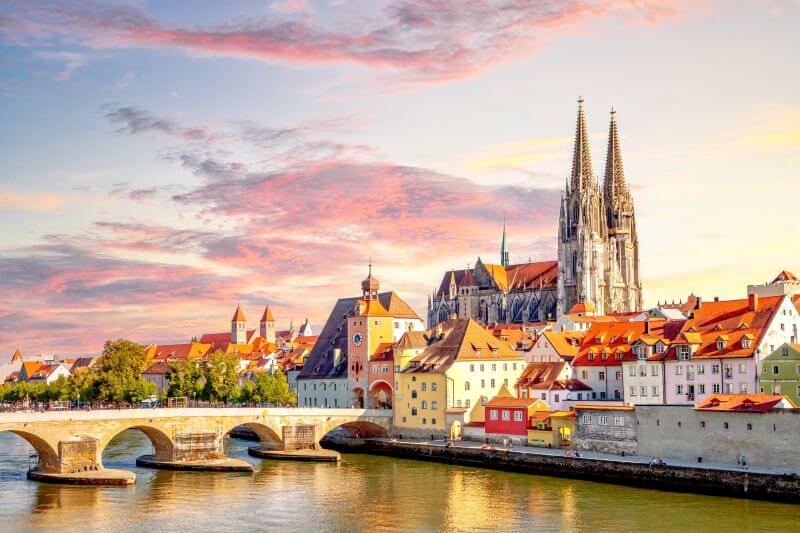
Address: Historic centre, 93047 Regensburg
Distance from Munich: Approximately 125 kilometres
Journey time: Around 1.5 hours by car or train
Regensburg is a living, breathing city with a spectacular medieval core, recognised by UNESCO as a World Heritage Site in 2006. As one of Germany’s oldest and best-preserved cities, its roots date back to Roman times, having been founded by Romans in 179 AD. It became one of medieval Germany’s most important cities, especially during the first half of the Middle Ages. The city escaped major damage during World War II, leaving around 1,500 historic buildings intact.
Regensburg Cathedral dominates the skyline with twin spires. The Gothic masterpiece features 13th and 14th-century stained glass windows, and is home to the Regensburger Domspatzen, one of the world’s oldest boys’ choirs founded in 975 AD.
Stone Bridge, built between 1135 and 1146, was a masterpiece of medieval engineering serving as the model for other European stone bridges including Prague’s Charles Bridge. Adjacent stands the Historic Wurstkuchl, claiming to be the world’s oldest continuously operating restaurant, serving sausages since the 12th century.
Thurn und Taxis Palace, home to the family who built Europe’s first postal service, is one of Germany’s largest inhabited castles. Guided tours reveal opulent state rooms and collections built over centuries.
Direct trains run regularly from Munich Hauptbahnhof to Regensburg, with the journey taking about 90 minutes. This is a popular day trip option from Munich. The old town is a 10-minute walk from the station. By car, take the A9 northbound towards Nuremberg, then the A93 to Regensburg.
Did you know? Regensburg’s name comes from Castra Regina (fortress by the Regen), but actually sits on the Danube. Roman remains including the Porta Praetoria near the cathedral, built around 179 AD, still stand to a height of several metres.
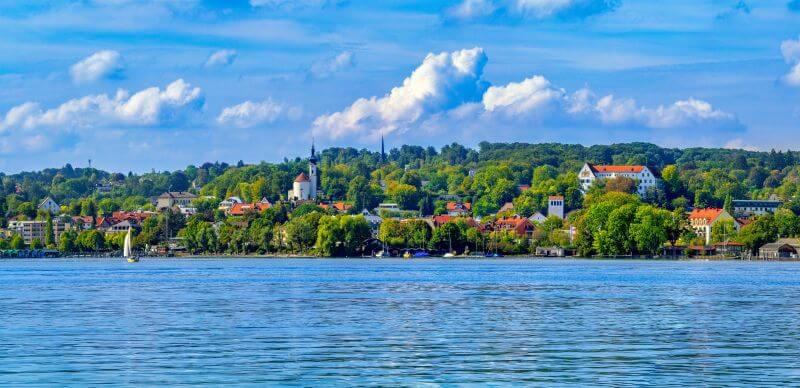
Location: Approximately 25 kilometres southwest of Munich
Journey time: Around 30–45 minutes by train
Lake Starnberg, easily accessed from Munich, stretches 21 kilometres through gently rolling countryside backed by Alpine views. Its proximity to Munich made it a favoured retreat for Bavarian royalty, and elegant villas lining its shores reflect that heritage. Lake Starnberg is the second largest lake in Bavaria and can be reached in less than an hour from Munich.
The lake is historically significant as where King Ludwig II died under mysterious circumstances in 1886. A cross in the water marks where his body was found, with a memorial chapel nearby at Berg village on the eastern shore.
S-Bahn line S6 from Munich to Starnberg (approximately 45 minutes from Marienplatz).
Regular passenger ferries connect main towns and villages from late March through October. The full circuit takes approximately 2 hours. A well-maintained cycle path follows the lake’s perimeter (approximately 49 kilometres). Lake Starnberg has several public bathing areas with excellent water quality. Swimming is most pleasant in July and August.
The nearby Andechs Monastery and brewery sits just kilometres from the lake’s western shore, offering sweeping views and renowned beers.
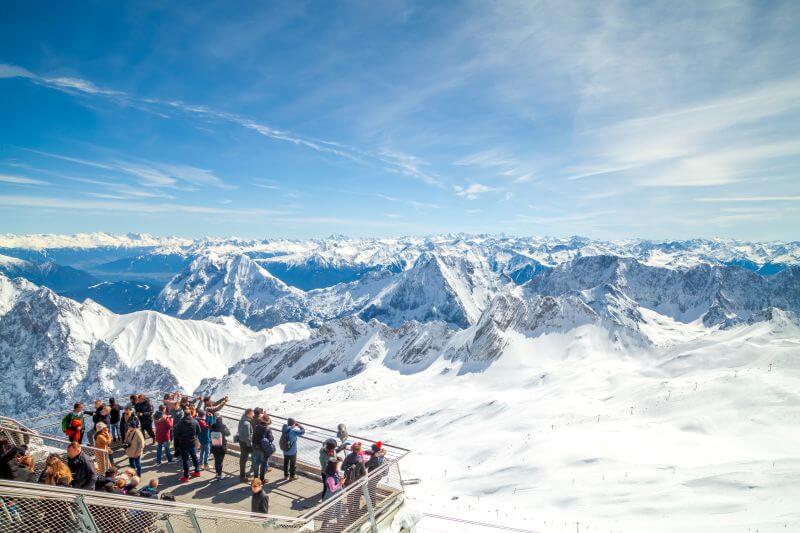
Location: Germany-Austria border, approximately 90 kilometres southwest of Munich
Journey time: Around 1.5 hours by car to valley stations, then cable car
At 2,962 metres, Zugspitze is the highest peak in the Bavarian Alps and the highest mountain in Germany. On clear days, panoramic views extend across four countries – Germany, Austria, Italy, and Switzerland – with hundreds of Alpine peaks visible. Zugspitze offers breathtaking views and a range of outdoor activities.
Modern cable cars make the summit easily accessed by anyone regardless of fitness level. The Zugspitze Cable Car from Eibsee takes just 10 minutes, holding world records for highest steel construction and longest unsupported span. The historic cogwheel train from Garmisch-Partenkirchen, opened in 1930, offers a scenic 45-minute journey with impressive mountain scenery to the summit.
Hiking trails in the surrounding area provide opportunities for visitors to explore the alpine environment and enjoy outdoor adventures.
Take a train from Munich Hauptbahnhof to Garmisch-Partenkirchen (approximately 1.5 hours), then local bus or taxi to Eibsee for the cable car. By car, take the A95 towards Garmisch-Partenkirchen.
Important: Book tickets in advance during peak periods through www.zugspitze.de.
Summit temperatures are typically 15–20°C (59–68°F) cooler than in valleys. Bring warm clothing even in summer.
The Partnach Gorge near Garmisch-Partenkirchen makes an excellent addition to a Zugspitze day trip – a dramatic narrow canyon with walkways along its walls.
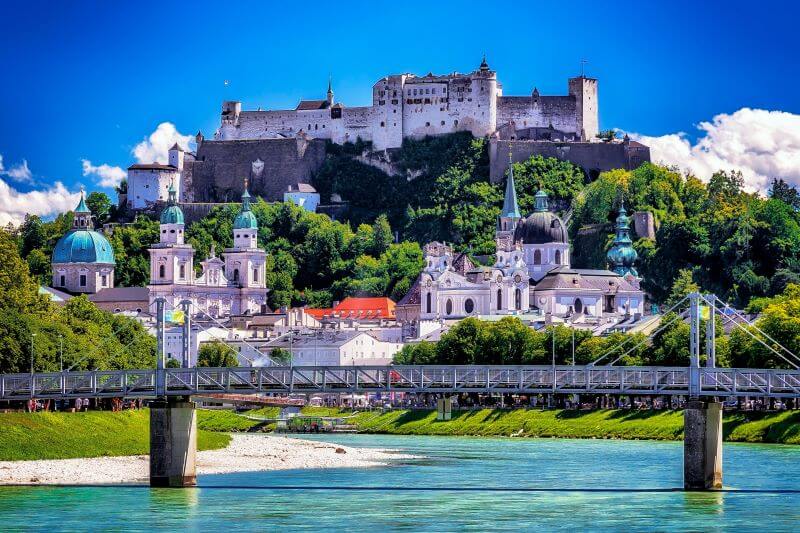
Distance from Munich: Approximately 145 kilometres
Journey time: Around 1.5–2 hours by train
Salzburg’s compact historic centre, a UNESCO World Heritage site, sits between the Salzach River and castle-topped Festungsberg, with Alpine peaks providing dramatic backdrop. The city’s baroque architecture and musical heritage make it one of Austria’s most visited destinations. Salzburg is a destination worth visiting in its own right, celebrated for its rich history and cultural significance.
Mozart’s Birthplace at Getreidegasse 9 displays instruments he played, portraits, and personal items. Hohensalzburg Fortress dominates the skyline – one of Europe’s largest medieval castles with state rooms and museums. Access is via funicular railway or walking path.
Mirabell Palace and Gardens, built in 1606, offer beautiful baroque gardens featured in “The Sound of Music.” Salzburg Cathedral, where Mozart was baptised, is a baroque masterpiece with space for 10,000 people. St. Peter’s Abbey, founded in 696 AD, includes an atmospheric cemetery with distinctive arcaded galleries.
The train journey from Munich Hauptbahnhof to Salzburg takes about 90–120 minutes and is covered by the Bayern Pass, making it a convenient and scenic option for day trips. Regular direct trains connect the two cities. By car, take the A8 eastbound. Austrian motorways require a vignette (toll sticker) purchased before entering Austria.
The Salzburg Card includes admission to most sights and public transport if you plan multiple attractions.
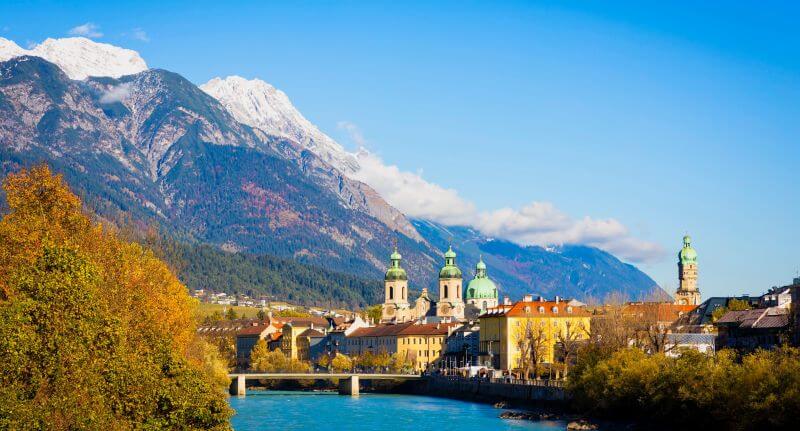
Distance from Munich: Approximately 160 kilometres
Journey time: Around 1.75–2 hours by train
Innsbruck sits dramatically in a valley with mountains rising sharply on all sides, just across the Austrian border. The compact historic centre clusters around the Golden Roof (Goldenes Dachl) – an ornate balcony covered with 2,738 gilded copper tiles built in 1500 for Emperor Maximilian I.
The Imperial Palace displays Habsburg wealth with elaborate rococo decoration. Hofkirche houses Maximilian I’s cenotaph surrounded by 28 larger-than-life bronze statues.
The Nordkette Cable Car transports you from city centre to 2,256 metres altitude in just 20 minutes, providing spectacular views and mountain trail access. The middle station features striking architecture by Zaha Hadid.
Direct trains run regularly from Munich Hauptbahnhof to Innsbruck (approximately 1.75–2 hours). Innsbruck can also be reached by night train from Munich for convenient overnight travel. By car, take the A95 towards Garmisch-Partenkirchen, then the Inntal motorway (A12). Austrian motorway vignette required.
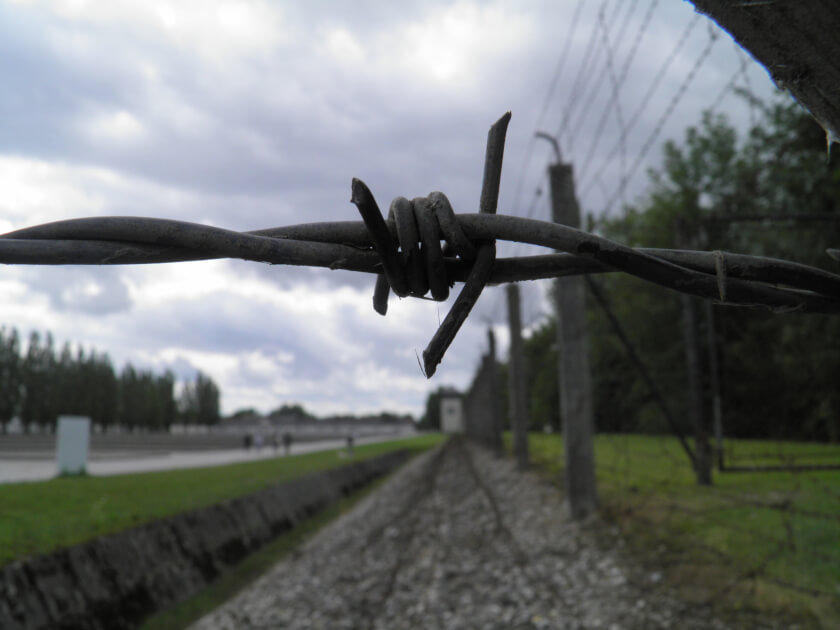
Address: Alte Römerstraße 75, 85221 Dachau
Distance from Munich: Approximately 20 kilometres
Journey time: Around 30 minutes by public transport
Dachau was the first concentration camp established by the Nazi party in March 1933. As the initial camp created by the regime, it served as the model and prototype for all subsequent concentration camps during World War II, highlighting its historical significance in the context of the Nazi party’s rise to power. While not primarily an extermination camp, more than 40,000 people died here during its 12 years of operation. Today it serves as a memorial and museum, preserving memory while educating about the mechanics of persecution.
The museum documents the camp’s history chronologically. Reconstructed barracks show desperately overcrowded conditions. Religious memorials provide spaces for reflection. The crematorium confronts visitors with the camp’s function as a place where people died.
Visiting: Open Tuesday–Sunday 9:00–17:00 (closed Mondays except public holidays). Entry is free. Guided tours in multiple languages are offered daily. This is an educational and memorial site deserving respectful behaviour.
Direct trains from Munich to Dachau take about 30 minutes, including a bus transfer to the memorial site. The train journey to Dachau takes about 21–38 minutes from Munich. Take S-Bahn line S2 to Dachau station (approximately 25 minutes), then bus 726 to the memorial site (approximately 10 minutes).
The Dachau Concentration Camp Memorial Site is a powerful day trip that serves as a reminder of the Holocaust.
Did you know? When American forces liberated Dachau on 29 April 1945, they found approximately 30,000 prisoners in desperate condition. Photographs and testimony from liberation helped bring the Nazi camp system’s reality to public awareness.
Tip: Allow at least 2.5–3 hours to visit the site properly.
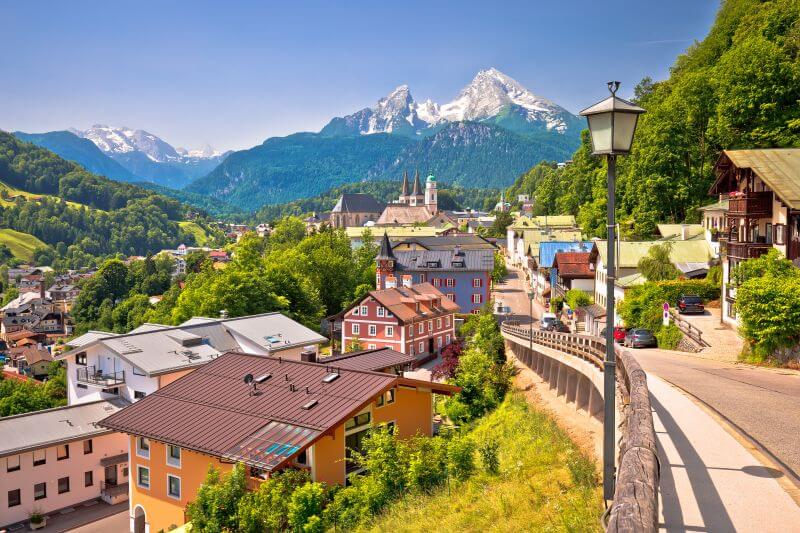
Location: Approximately 150 kilometres south of Munich
Journey time: Around 2.5 hours by car
Berchtesgaden is renowned for its old world charm, with a historical and picturesque atmosphere, well-preserved architecture, and traditional streets. The town is surrounded by exceptional natural beauty, with steep mountains and the fjord-like Königssee nearby. Berchtesgaden is also known for its beautiful mountain trails and the Eagle’s Nest, making it a top destination for outdoor enthusiasts. Numerous hiking trails in the area offer visitors the chance to explore panoramic alpine views and immerse themselves in nature. The area balances its role as a mountain resort with honest acknowledgement of complex history as the location of Hitler’s mountain retreat.
The Eagle’s Nest, perched at 1,834 metres, is accessible mid-May through October via special buses and an elevator through the mountain. Today it operates as a restaurant and viewing point with historical exhibition.
The Obersalzberg Documentation Centre provides comprehensive context about the National Socialist period and the region’s post-war history.
Königssee, surrounded by steep mountains, is one of Germany’s most beautiful natural sites. Electric-powered boats transport visitors across crystal-clear water to St. Bartholomew’s Church, a distinctive pilgrimage church on the western shore.
The Salt Mine has operated for over 500 years. Guided tours include a boat ride on an underground salt lake and slides between levels.
If you’re interested in local specialties, don’t miss Berchtesgaden’s famous beer, a regional highlight.
Take a train from Munich Hauptbahnhof to Berchtesgaden (approximately 3 hours with connections). By car, take the A8 towards Salzburg, then the B20 south.
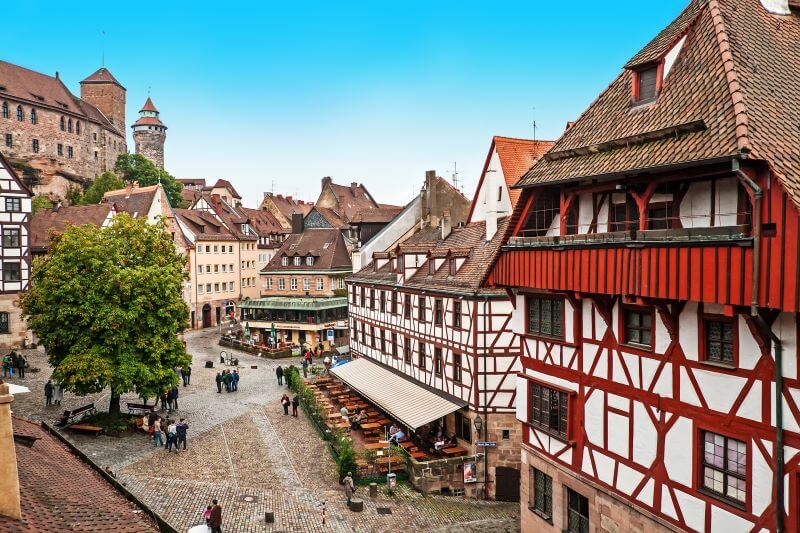
Distance from Munich: Approximately 170 kilometres
Journey time: Around 1–1.5 hours by train
Nuremberg carries tremendous historical weight – from its importance as a medieval imperial city through its darker role in Nazi Germany to its post-war significance as the location of the war crimes trials. The contrast between these periods creates a destination that rewards thoughtful visitors seeking to understand Germany’s complex past alongside genuine medieval beauty.
The Imperial Castle towers above the old town from its rocky hilltop, where Holy Roman Emperors held court for over 500 years. The castle complex offers panoramic views across Nuremberg’s distinctive red-roofed architecture. The Historic Old Town, though heavily reconstructed after World War II bombing destroyed approximately 90% of the medieval centre, successfully recreates the atmosphere of pre-war Nuremberg. St. Sebaldus Church and St. Lawrence Church showcase Gothic architecture, while the Hauptmarkt (main market square) hosts the famous Christkindlesmarkt, Germany’s most celebrated Christmas market, from late November through December.
The Nazi Party Rally Grounds on the city’s southeastern edge document the massive propaganda events held here during the 1930s. The Documentation Centre inside the unfinished Congress Hall provides comprehensive exhibition about Nazi ideology, their use of Nuremberg as a symbolic backdrop, and the reality behind the propaganda imagery. The Nuremberg Trials Memorial occupies Courtroom 600 where major war criminals faced justice – a sobering reminder that the city played crucial roles in both Nazi rise and post-war reckoning.
Frequent direct trains connect Munich Hauptbahnhof to Nuremberg (approximately 1–1.5 hours) – this is one of Germany’s busiest rail corridors with departures every 30 minutes. By car, take the A9 northbound. The old town is compact and walkable from the main station (about 15 minutes).
Nuremberg’s combination of medieval heritage and 20th-century historical sites requires a full day to experience properly. The city also has excellent Franconian restaurants serving regional specialties distinct from Bavarian cuisine found in Munich.
Bayern-Ticket: The Bayern Ticket allows unlimited travel on regional trains, S-Bahn, trams, and buses throughout Bavaria for one day, starting at 34€ for one person, with additional costs for more people. Children aged 5 years old and under can travel for free with the Bayern Ticket. Valid from 9:00 a.m. on weekdays (midnight on weekends) until 3:00 a.m. the following morning. Purchase your train ticket from ticket machines, online via Deutsche Bahn, or ticket counters at Munich Central Station, the main hub for regional departures.
Train travel from Munich Central Station is convenient and affordable, making it easy to reach many destinations. Typical journey times include: Munich to Nuremberg (65–75 minutes), Regensburg (about 90 minutes), Dachau (about 30 minutes including bus transfer), Salzburg (90–120 minutes, covered by the Bayern Pass), Bamberg (about 2 hours), and Augsburg (about 25 minutes). The S-Bahn and U-Bahn also provide easy access to many nearby destinations.
Best times to visit: Spring and autumn offer moderate crowds and pleasant temperatures. Summer provides warmest weather but peak crowds. Winter offers Christmas markets but shorter days and colder weather.
Booking ahead: Neuschwanstein requires advance booking (tickets sell out weeks ahead in summer). Herrenchiemsee and Zugspitze are recommended for peak times.
What to bring: Comfortable walking shoes, weather-appropriate layered clothing, water, sunscreen, camera, and any advance-booked tickets. For mountains, add warm jacket and wind protection even in summer. Bring cash, as credit cards are not widely accepted in rural areas of Germany.
Organised day tours and organised bus tours from Munich can simplify logistics and provide comfort for visiting popular attractions.
Consider your interests and energy levels when selecting day trips. Castle enthusiasts might prioritise Neuschwanstein and Herrenchiemsee. History buffs would value Regensburg, Rothenburg, and Dachau. Nature lovers should focus on Zugspitze, Königssee, and Lake Starnberg.
Don’t try to do everything. Two or three quality day trips will create better memories than rushed visits to six destinations. Allow time to absorb experiences, chat with locals, and simply enjoy being in remarkable places.
Bavaria rewards curiosity. These day trips from Munich offer famous destinations with reliable appeal, but enough flexibility that your experience will be uniquely your own, shaped by your interests, the people you meet, and the choices you make along the way.